
5 Best Bagged Compost for Garden Beds
Michigan Peat Garden Magic Compost Blend is the best bagged compost for garden use for most buyers because it works as a general soil amendment for beds, containers, and lawn projects. Its blend of composted organic materials offers a practical all-purpose option when you want to improve soil without buying several products.
This guide is for gardeners comparing ready-to-use bags for vegetables, flowers, raised beds, and new plantings. The key factors are the material mix, texture, moisture level, bag weight, and coverage per bag. Those details affect how easily the compost spreads and where it fits in a planting plan. The five picks below are ranked by intended use, ingredient quality, and value, with clear reasons and honest drawbacks for each. Check the label before buying, since formulas and bag sizes can vary by retailer.
Quick Comparison
| # | Product | Best For | Price | |
|---|---|---|---|---|
| 1 | Michigan Peat Garden Magic Compost Blend | General garden bed improvements | $29.99 | View → |
| 2 | R&M Organics Compost Soil Amendment | Organic soil amendment shoppers | $24.49 | View → |
| 3 | Brut Cow Compost Composted Cow Manure | Cow manure fertilizer users | $24.99 | View → |
| 4 | Old Potters Organic Compost Potting Soil | Organic container gardening | $39.99 | View → |
| 5 | Michigan Peat Garden Magic Compost Topsoil Blend | Lawn and garden topdressing | $28.99 | View → |
5 Top Bagged Compost Picks
Below, these five bagged composts are ranked by quality, value, and suitability, counting down to the top garden pick.
5. Michigan Peat Garden Magic Compost Topsoil Blend
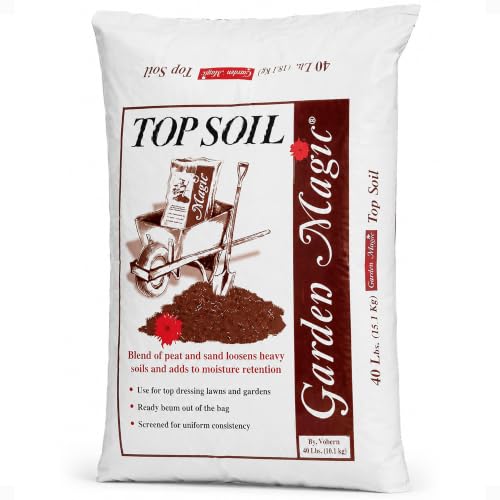
Best for: Loosening clay and filling garden beds
Michigan Peat Garden Magic is a 40-pound organic compost topsoil blend for indoor and outdoor planting. It comes ready to use, so you can add it directly to containers, garden beds, or bare lawn spots without mixing it first. The dark blend combines reed sedge peat and sand. That material mix gives roots access to moisture while allowing extra water to move away.
Its most useful role may be soil improvement rather than standalone potting soil. Work it into heavy clay to loosen compacted ground, or add it to light soil that dries quickly. It can also act as a top dressing for holes in lawns and garden beds. The broad-purpose formula suits routine planting projects and gardeners who want one bag for several tasks. At around $29, the 40-pound size offers a practical amount for small beds and repairs, though it may not cover large areas. The product details do not list an N-P-K fertilizer analysis, so heavy-feeding plants may need separate plant food.
Pros
- Ready-to-use blend works indoors and outdoors.
- Reed sedge peat helps hold moisture between waterings.
- Sand supports drainage and loosens dense soil.
Cons
- A 40-pound bag can be awkward to carry and spread.
- General-purpose soil may not suit plants with specialized pH or nutrient needs.
4. Old Potters Organic Compost Potting Soil

Best for: Organic gardeners filling large containers
Old Potters Organic Compost is a plant-based potting soil and compost blend for indoor and outdoor growing. The bag contains about 25 pounds, or 24 quarts, which gives home gardeners enough material for several smaller pots or a larger container. It is marketed as 100% organic and chemical-free, so it fits gardens where natural inputs matter.
Its main benefit is improving the soil around plant roots. The compost can help create more air space, hold moisture, and make nutrients easier for plants to access. Those traits may support healthier growth, especially in tired garden soil or container mixes that drain poorly. The material also comes from recycled organic waste, giving it a useful sustainability angle. At around $40, it costs more than some basic potting mixes, so the larger 24-quart volume matters when comparing value. There is no listed nutrient analysis, though, so gardeners may need a separate fertilizer for crops with specific feeding needs.
Pros
- Plant-based, organic material suits chemical-free home gardens.
- Helps improve aeration and water retention around roots.
- A 24-quart bag works for indoor pots and outdoor beds.
Cons
- The 25-pound bag may be awkward to lift or store in small spaces.
- No NPK analysis is provided, so feeding needs may require separate fertilizer.
3. Brut Cow Compost Composted Cow Manure

Best for: Container gardeners wanting additive-free compost
Brut Cow Compost is a 10-quart bag of 100% composted cow manure. It contains no additives, and its finely sifted texture should blend into potting mixes, garden beds, or lawn soil. Listed nutrients include nitrogen, calcium, and iron. The organic matter can also support microbial activity in depleted soil. At around $25, it costs more than some bulk manure products, but the smaller package suits routine home gardening.
Its broad use range is the main advantage. You can mix it into garden soil, spread it as a top dressing, or add it to containers and houseplants. The product is described as odor-free and gentle on roots, which reduces concerns about unpleasant smells or root burn. It is also OMRI listed, and the manure is described as thoroughly composted, aerated, and safety tested. Still, this is a soil amendment, not a precisely measured fertilizer. The supplied details do not include an N-P-K ratio.
Pros
- Made only from composted cow manure, with no additives.
- Fine texture works for garden beds, lawns, containers, and indoor plants.
- OMRI listed and described as odor-free and gentle on roots.
Cons
- A 10-quart bag may not cover large garden beds or lawn areas.
- No N-P-K analysis is provided, so exact feeding rates are unclear.
2. R&M Organics Compost Soil Amendment

Best for: Small garden beds and containers
R&M Organics Compost Soil Amendment is a dairy cow manure compost for garden beds, raised beds, pots, lawns, and landscaping. The 10-pound bag can replenish nutrients used by previous crops and improve the soil around vegetables, herbs, flowers, fruit trees, and turf. It also works for indoor containers, including plants such as orchids and citrus.
What stands out is its broad use and simple application. For established plants, spread a thin layer of about ¼ inch around the base. For new projects, mix it into the existing soil. The compost goes through continuous aeration during processing, which helps reduce strong manure odors and unwanted impurities. It should have a clean, earthy scent instead. The organic material can improve soil texture, aeration, and moisture retention, so containers and garden beds may dry out less quickly. At under $25, it is reasonably priced for small to medium projects, but larger yards will need more than one bag.
Pros
- Fully composted material has a milder, earthy odor than fresh manure.
- Supports soil moisture retention and improved aeration.
- A 10-pound bag is easy to carry, store, and apply.
Cons
- The small bag may not cover large lawns or multiple raised beds.
- No specific N-P-K analysis is provided, so gardeners cannot match nutrients to precise soil needs.
1. Michigan Peat Garden Magic Compost Blend
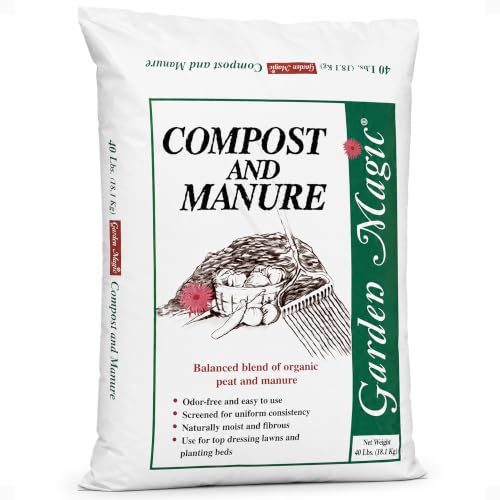
Best for: Small raised beds and planters
Michigan Peat Garden Magic is a 40-pound bag of organic reed sedge peat blended with composted animal manure. It arrives ready to mix into potting soil, raised beds, or lawn soil, so there is no separate composting step. The material is listed as odor-free, which may suit gardeners working near patios, porches, or indoor-starting areas. Each bag contains about 0.75 cubic feet, enough for targeted soil improvement rather than a full garden renovation. At around $30, it costs more than some bulk compost options, but the pre-mixed format can reduce the need to buy separate amendments.
The main appeal is flexibility. Use it around flowers, vegetables, and grass, or blend it into planter soil for container projects. The peat can add body to loose mixes, while the composted manure supplies nutrients for plant growth. Still, this is a soil amendment, not a complete growing medium for every container. Gardeners may need to combine it with other ingredients and follow crop-specific feeding instructions. The listing also does not provide a pH range or guaranteed nutrient analysis, so precise soil management may require a separate test.
Pros
- Ready-to-use peat and composted manure blend
- Odor-free material suits patio and container gardening
- Supports soil improvement for flowers, vegetables, and grass
Cons
- The 0.75-cubic-foot bag may not cover large beds
- No listed pH range or guaranteed nutrient analysis
Buying Guide
The most important factor is compost maturity, because unfinished material can steal nitrogen and damage seedlings. Choose a product labeled fully matured or ready to use, with a dark, earthy smell and no strong ammonia odor.
- Feedstock: Look for named ingredients such as green waste, leaf mold, or composted manure, rather than “organic matter” alone. Plant-based blends suit most beds.
- Maturity: Choose compost cured for at least 3 months. It should feel cool inside the bag, contain no steaming clumps, and show no fresh grass or food scraps.
- Texture: Aim for a crumbly mix with particles around 3 to 15 millimeters. Avoid dusty fines, wood chips over 25 millimeters, or wet sludge.
- Safety and testing: Prefer screened products with weed-free claims and tests for pathogens, heavy metals, and plastic. Manure-based compost should state that it reached at least 131°F for pathogen control.
- Bag value: Compare the cost per 40 liters, not just the shelf price. For raised beds, apply 2 to 3 inches, which equals about 0.6 to 0.9 cubic yards per 100 square feet.
If you cannot have everything, prioritize maturity, since poor curing can harm plants even when texture and price look appealing.
Frequently Asked Questions
How do I choose bagged compost for my garden?
The right bagged compost depends on its ingredients, maturity, and intended use. Choose a peat-free mix with visible organic matter, a neutral to slightly alkaline pH if listed, and no strong sour smell. For raised beds, a 40-litre bag usually covers about 0.8 square metres at a 5-centimetre depth.
What is bagged garden compost best used for?
Bagged garden compost is best used as a soil improver, mulch, or ingredient in planting mixes rather than as a complete growing medium. Mix it into the top 15 to 20 centimetres of soil, using roughly one part compost to two parts existing soil for beds and borders.
Can I use bagged compost for all garden plants?
Yes, you can use bagged compost for most established garden plants, but seedlings and sensitive plants need a finer, lower-nutrient mix. Apply a 2 to 5 centimetre layer around plants without covering stems, and check the label before using compost containing manure near edible crops.
Are peat-free compost bags better for garden soil?
Peat-free compost bags are usually the better choice for garden soil because they avoid peat extraction, but quality varies by recipe and storage. Look for wood fibre, green waste, bark, or coir, and keep bags dry; a wet, compacted bag may need breaking up before use.
Conclusion
Michigan Peat Garden Magic Compost Blend is the top recommendation for gardeners who want one versatile, general-purpose mix for beds, borders, containers, and soil improvement. If your priority is peat-free gardening, choose a clearly labeled peat-free compost instead, since its ingredients better match that goal. Before buying, double-check the bag size, plant compatibility, number of bags needed, and current price, because low shelf prices can hide a smaller volume. Also consider where the compost will go. A rich blend may suit vegetables and flowers, while a lighter mix can work better for pots and seedlings. Buy enough to cover the area at the recommended depth, then store unopened bags under cover until use.