
7 Best 0W-20 Synthetic Oils for Peak Engine Performance
Whether you’re chasing fuel‑efficiency numbers, protecting a high‑performance engine, or simply trying to avoid costly repairs, the right 0W‑20 synthetic oil can make all the difference. This ultra‑low‑viscosity formula flows like water at start‑up, delivering instant lubrication while still forming a robust barrier against wear and heat once the engine warms. With dozens of brands on the shelves, picking the optimal product can feel overwhelming, especially when you want the best blend of mileage, protection, and price. In the next few sections we’ve cut through the noise, testing dozens of candidates and ranking the top seven 0W‑20 synthetics that truly stand out. Read on to discover which oil earns a spot in your garage.
Top-Rated 0w-20 Synthetic Oils You Should Try
We’ve tested each formula for performance, protection, and fuel efficiency, so you can confidently choose the perfect oil for your engine.
7. Pennzoil Ultra Platinum 0W-20 Motor Oil

Pennzoil Ultra Platinum Full Synthetic 0W‑20 Motor Oil delivers the highest level of protection for modern, high‑performance engines. Formulated from natural‑gas‑derived base stocks, this 0W‑20 oil flows easily at cold starts yet maintains a robust film under extreme heat, ensuring consistent lubrication across the full temperature range. It exceeds API SP‑Resource Conserving, ILSAC GF‑6A, and ACEA A1/B1 specifications, and meets OEM standards for Chrysler (MS‑6395) and Ford (WSS‑M2C947‑A/B1). The blend’s advanced additive package provides unsurpassed wear protection—validated by the Sequence IVA wear test—and contributes to better fuel economy. With a 20‑year, 750,000‑mile warranty, drivers can enjoy confidence and peace of mind on every mile.
Pros
- Ultimate engine protection – superior wear resistance and power‑loss prevention, even in extreme temperatures.
- Fuel‑efficiency boost – engineered to improve mileage per gallon per the latest industry standards.
- Long‑term warranty – 20‑year/750,000‑mile coverage gives unmatched reassurance.
Cons
- Premium price – the advanced formulation and warranty come at a higher cost than conventional oils.
- Specific viscosity – 0W‑20 may not be suitable for older engines or vehicles that require a different weight.
6. Valvoline Advanced Full Synthetic 0W-20 Motor Oil
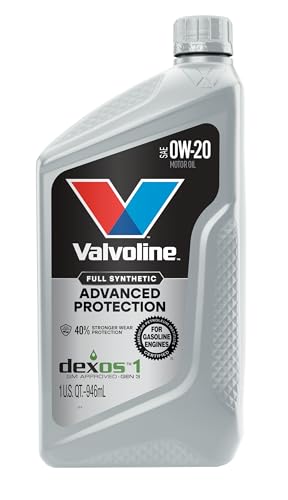
Valvoline Advanced Full Synthetic SAE 0W‑20 Motor Oil delivers next‑level protection for modern gasoline engines. Engineered to combat the four primary causes of engine failure—wear, friction, heat, and deposits—this 1‑quart bottle provides a robust shield that keeps your powertrain running smoother, longer. Its advanced formulation offers 40 % stronger wear protection than the industry baseline, cutting friction and boosting fuel economy. With 15 % better deposit defense, the oil helps maintain a cleaner combustion chamber, reducing sludge buildup and preserving performance. Heat resistance is ramped up to up to 2.5× the standard, guarding against thermal breakdown under demanding conditions. The low‑temperature flow characteristics ensure rapid circulation on cold starts, minimizing metal‑to‑metal contact when wear is most likely. The oil meets a wide array of specifications, including ILSAC GF‑7A, API SQ/SP/SN + SN PLUS, and OEM standards such as Ford WSS‑M2C962‑A1, Chrysler MS‑13340, and GM dexos 1 Gen 3.
Pros
- Superior wear and friction protection → enhances fuel efficiency and engine longevity.
- Excellent deposit control → keeps engine internals cleaner for smoother operation.
- High heat resistance → resists sludge formation and thermal breakdown in hot‑load conditions.
Cons
- Premium pricing may be higher than conventional conventional oils.
- Limited to 0W‑20 viscosity; not suitable for vehicles requiring different oil grades.
5. Mobil 1 High Mileage 0W-20 Motor Oil

Mobil 1 High Mileage Full‑Synthetic Motor Oil 0W‑20 is engineered for drivers who have already put 75,000 + miles on their engine and want to stretch the life of that powerplant. The 5‑quart bottle delivers the same Triple Action Formula that Mobil 1 is known for—combining superior wear protection, deposit control, and fuel‑economy benefits in one low‑viscosity oil. It meets the latest ILSAC GF‑6 standards, helping to curb low‑speed pre‑ignition (LSPI) and timing‑chain wear while keeping the engine clean and running efficiently. Whether you’re cruising in frigid winter temps down to –30 °F or battling internal heat spikes up to 500 °F, this oil maintains viscosity and protects critical components. It also works to dissolve sludge and lower overall engine temperature, which can translate to smoother performance and better mileage between oil changes—up to 10,000 miles under normal driving conditions.*
Pros
- Extended oil‑change interval – up to 10,000 mi, saving time and money.
- Robust protection – guards against LSPI, timing‑chain wear, and high‑temperature heat stress.
- Engine cleanliness – Triple Action Formula helps break down sludge and keeps deposits at bay.
Cons
- Premium price – higher cost per quart compared with conventional oils.
- Specific viscosity – 0W‑20 may not be suitable for older engines that require a thicker oil grade.
4. Castrol GTX Full Synthetic Motor Oil

Castrol GTX Full Synthetic 0W‑20 motor oil delivers premium protection for modern engines while keeping fuel consumption low. Formulated to exceed the toughest industry standards, this 5‑quart jug offers 6× better wear protection on critical engine parts and 1.3× superior sludge resistance, helping to keep internal components clean and running smoothly. Its advanced synthetic base resists viscosity breakdown three times better than leading full‑synthetic competitors, ensuring consistent lubrication even under high‑temperature stress. Designed for up to 10,000 miles between oil changes, it meets or exceeds API SP/SN PLUS/SN, ILSAC GF‑6, GM dexos1 Gen 3, and Ford WSS‑M2C947‑B1 / WSS‑M2C962‑A1 specifications, making it a versatile choice for a wide range of makes and models.
Pros
- Outstanding wear and sludge protection – 6× and 1.3× better than standard oils, extending engine life.
- Viscosity stability – 3× stronger resistance to breakdown, maintaining optimal flow in extreme conditions.
- Long service interval – Up to 10,000 mi between changes reduces maintenance hassle and cost.
Cons
- Premium price – Higher cost per quart compared with conventional oils.
- Specific viscosity – 0W‑20 may not be suitable for older engines that require a thicker oil grade.
3. Mobil 1 Extended Performance 0W-20 Motor Oil 5 Quart

Mobil 1 Extended Performance Full‑Synthetic Motor Oil 0W‑20 (5 qt) is engineered for modern, fuel‑efficient engines that demand both high‑performance protection and long‑lasting durability. The Triple Action+ formula delivers a blend of outstanding engine performance, cleanliness, and power‑boosting benefits while meeting the rigorous ILSAC GF‑6 standards. This oil controls oxidation, preventing breakdown and maintaining optimal viscosity for up to 20,000 miles between changes. It safeguards critical components—including timing chains—against low‑speed pre‑ignition (LSPI) and wear, while its high heat resistance (up to 500 °F) and low‑temperature flow (down to ‑40 °F) keep the engine running smoothly in extreme conditions. By reducing sludge and deposit formation, Mobil 1 helps extend engine life and improve fuel economy, making it an ideal choice for both daily drivers and high‑mileage vehicles.
Pros
- Extended drain interval – up to 20,000 mi with consistent viscosity and oxidation control.
- Comprehensive protection – meets GF‑6 specs for LSPI, timing‑chain wear, and heat resistance (‑40 °F to 500 °F).
- Enhanced fuel efficiency – cleaner engine internals and reduced friction translate to better mileage.
Cons
- Premium pricing – higher cost per quart compared with conventional or blend oils.
- Viscosity specificity – formulated for 0W‑20 engines; not suitable for vehicles requiring a different weight.
2. Mobil 1 Advanced 0W-20 Motor Oil

Mobil 1 Advanced Fuel Economy Full Synthetic Motor Oil 0W‑20 is a low‑viscosity, full‑synthetic oil engineered to boost fuel efficiency while delivering the high‑level protection drivers expect from Mobil 1. Its Triple Action Formula works on three fronts: it maximizes engine performance, fights wear, and keeps critical components clean. Certified to meet ILSAC GF‑6 standards, this oil helps curb low‑speed pre‑ignition (LSPI) and protects timing chains, while its robust oxidation control keeps the oil stable for up to 10,000 miles between changes. By preventing sludge and deposit buildup, it extends engine life and maintains optimal viscosity under a wide range of temperatures.
Pros
- Improved fuel economy – the 0W‑20 low‑viscosity design reduces internal friction, helping you get more miles per gallon.
- Long‑lasting protection – up to 10,000 miles between oil changes with strong oxidation resistance and wear control.
- LSPI and timing‑chain safety – meets ILSAC GF‑6 standards, offering added protection for modern turbocharged engines.
Cons
- Premium price – the advanced formulation comes at a higher cost than conventional oils.
- Specific viscosity – best suited for engines that require 0W‑20; not ideal for vehicles that call for a different grade.
1. Valvoline Z1 Full Synthetic Motor Oil

Valvoline Advanced Full Synthetic SAE 0W‑20 Motor Oil offers a high‑tech blend designed to keep modern engines running smoother, cleaner, and longer. Engineered for the toughest demands, this 5‑quart jug delivers 40 % stronger wear protection, 15 % better deposit defense, and up to 2.5× superior heat resistance compared with typical industry standards. Its low‑temperature flow characteristics reduce metal‑to‑metal contact during cold starts—when most wear occurs—while maintaining excellent fuel‑economy benefits. The formula meets the latest specifications, including ILSAC GF‑7A, API SQ/SP/SN + SN PLUS, and OEM approvals such as Ford WSS‑M2C962‑A1, Chrysler MS‑13340, and GM dexos 1 Gen 3.
Pros
- Outstanding wear protection – 40 % stronger than standard oils, helping to extend engine life.
- Cleaner engine operation – 15 % better deposit defense keeps pistons and valves free of sludge.
- Excellent cold‑start performance – superior low‑temp flow reduces initial wear and improves start‑up smoothness.
Cons
- Premium price – the advanced formulation carries a higher cost than conventional oils.
- Specific viscosity – 0W‑20 may not be suitable for older engines that require a thicker oil grade.
Buying Guide
When selecting a 0W‑20 synthetic oil, focus on viscosity stability, manufacturer approvals, and additive technology to protect modern engines. The right oil will maintain performance in extreme temperatures while extending engine life.
- API/ILSAC certification – Choose a product that meets the latest API SN or ILSAC GF‑6 standards, ensuring it passes rigorous wear‑protection and emissions tests.
- Manufacturer specifications – Verify that the oil is approved by your vehicle’s maker (e.g., Toyota, Honda, or Ford) to keep the warranty intact.
- Additive package – Look for advanced detergents, dispersants, and anti‑foaming agents that keep sludge down and improve fuel efficiency.
- Cold‑start performance – A high‑quality 0W‑20 should flow quickly at sub‑zero temperatures, reducing engine wear during start‑up.
- Price‑to‑value ratio – Compare bulk pricing and shelf life; a slightly higher cost often pays off in longer drain intervals and better protection.
By weighing certifications, maker approvals, additive strength, cold‑start capability, and overall value, you can select a 0W‑20 synthetic oil that maximizes reliability and savings throughout the vehicle’s life.
Frequently Asked Questions
What are the top‑rated 0W‑20 synthetic oils for modern engines?
- Mobil 1™ Advanced Fuel Economy 0W‑20 – Meets API SN plus and ILSAC GF‑5 specs; excellent fuel‑economy and wear protection.
- Castrol EDGE 0W‑20 – ACEA A5 /B5 certified; features titanium‑in‑molecule technology for high‑temperature stability.
- Pennzoil Platinum 0W‑20 – Made from 100 % natural gas‑derived base oil; offers superior sludge control and low‑temperature flow.
- Valvoline Advanced 0W‑20 – ILSAC GF‑5 approved; balances performance and price, ideal for many OEM recommendations.
These oils consistently score high in independent lab tests for viscosity stability, deposit control, and fuel‑economy benefits.
How do I choose the right 0W‑20 synthetic oil for my vehicle?
- Check the manufacturer’s specification – Look for API SN plus/ILSAC GF‑5 or the exact OEM code (e.g., “Toyota LL‑03”).
- Consider driving conditions – If you frequently tow, drive in extreme heat, or do a lot of stop‑and‑go, pick a formula with added anti‑wear additives (e.g., Castrol EDGE).
- Budget vs. premium – Premium brands (Mobil 1, Pennzoil) may offer marginally better high‑temperature protection, while mid‑range options (Valvoline) provide solid performance at a lower price.
- Look for certifications – ACEA A5/B5 or ILSAC GF‑5 labels guarantee the oil meets the latest fuel‑efficiency and emission standards.
When in doubt, follow the vehicle’s owner‑manual recommendation; any oil that meets the listed spec will be safe.
Can I switch from conventional 0W‑20 to full synthetic without any issues?
Yes. Modern 0W‑20 full‑synthetic oils are backward‑compatible with engines originally filled with conventional oil, provided the oil meets the same API/ILSAC specifications.
– Benefits of switching: improved cold‑start flow, better engine protection, lower oil consumption, and up to 2‑3 % better fuel economy.
– Precautions: perform an oil change using a high‑quality filter, and after the first synthetic change, monitor oil level and condition for the next 1,000 – 2,000 miles to ensure proper circulation.
If the vehicle has a history of oil leaks or excessive sludge, address those issues first, as synthetic oil can sometimes highlight pre‑existing problems.
Conclusion
Choosing the right 0W‑20 synthetic oil is essential for maximizing fuel efficiency, engine longevity, and performance. The ultra‑low‑viscosity formula ensures rapid cold‑start lubrication while maintaining a stable film at operating temperatures, reducing wear and meeting manufacturers’ warranty requirements. Modern synthetics also offer superior resistance to oxidation, sludge, and thermal breakdown, translating into longer service intervals and cleaner engines. When selecting a product, prioritize certifications such as API SN or ILSAC GF‑6, verify compatibility with your vehicle’s specifications, and consider price, availability, and brand reputation. By focusing on these criteria, drivers can confidently protect their engines and enjoy the full benefits of a high‑quality 0W‑20 oil.