
5 Best Filtered Water Bottle for Traveling Abroad Trips
The Brita Stainless Steel Filtering Water Bottle is the best filtered water bottle for traveling abroad for most buyers. Its built-in filter improves the taste of treated tap water without requiring a separate purifier. The stainless steel body also suits frequent travel better than a thin disposable bottle, though this model is not a substitute for purifying unsafe water.
This guide is for travelers who want to refill from hotel, airport, and restaurant taps. The two biggest factors are capacity and filter replacement cost. A larger bottle reduces refills but takes more room in a day bag, while replacement filters add an ongoing expense. The five picks below are ranked with clear reasons and honest drawbacks for each, so you can match a bottle to your route, luggage, and refill options.
Quick Comparison
| # | Product | Best For | Price | |
|---|---|---|---|---|
| 1 | Brita Stainless Steel Filtering Water Bottle | Best For Office Hydration | $24.99 | View → |
| 2 | LifeStraw Go Series Water Filter Bottle | Best For International Travelers | $32.40 | View → |
| 3 | LifeStraw Go Series Water Filter Bottle | Best For Emergency Preparedness | $37.05 | View → |
| 4 | Brita Premium Filtering Water Bottle | Best For Everyday Commuters | $17.99 | View → |
| 5 | LifeStraw Go Series Steel Water Filter Bottle | Best For Durable Outdoor Use | $47.96 | View → |
5 Top Filtered Water Bottles for Travel
These five travel water bottles are ranked by filtration, portability, and value, counting down to the top pick.
5. LifeStraw Go Series Steel Water Filter Bottle

Best for: Travelers needing safer refills
The LifeStraw Go Series is a 24-ounce insulated stainless steel bottle with a BPA-free build and an integrated drinking filter. It is designed for refilling from questionable taps, public bathrooms, and roadside stops. The membrane microfilter is rated to remove 99.999999% of bacteria, including E. coli and Salmonella, plus 99.999% of parasites such as Giardia and Cryptosporidium. It also filters microplastics, sand, dirt, and cloudiness.
The standout feature is the filter’s long service life. The membrane lasts up to 1,000 gallons, or 4,000 liters, which LifeStraw estimates at about five years of daily use. A carbon stage improves flavor by reducing chlorine, odors, and some organic chemicals. That cartridge lasts up to 26 gallons, or 100 liters, roughly two months. At around $48, the bottle costs more than a basic insulated tumbler, but it can reduce reliance on single-use bottles during trips. The 24-ounce capacity is portable, though frequent refills may be necessary on long outings.
Pros
- Filters rated amounts of bacteria, parasites, microplastics, dirt, and cloudiness.
- Carbon filtration reduces chlorine, odors, and some organic chemical matter.
- A 4,000-liter membrane lifespan can limit disposable bottle waste.
Cons
- The carbon filter lasts only about 100 liters, so it needs replacement much sooner than the membrane.
- The listed filtration does not claim virus removal, so it is not a complete solution for every unsafe water source.
4. Brita Premium Filtering Water Bottle

Best for: Daily filtered water on the go
This 26-ounce Brita bottle uses BPA-free, hard-sided plastic and includes one activated carbon block filter. As you drink through the straw, the filter reduces chlorine taste and odor, along with some particulates. It is not a water purifier, so it will not make unsafe water safe. At around $18, it offers a practical alternative to buying bottled water for commutes, errands, or desk use.
The design focuses on quick access. A one-handed push-button lid opens the bottle, while the built-in loop makes carrying easier. Brita describes the construction as leakproof, which helps limit spills in a bag when the lid is closed. The bottle is top-rack dishwasher-safe for simpler cleaning. One filter is rated for 40 gallons or about two months, and the bottle works with Brita replacement filters. Depending on use, Brita says one filter can replace up to 300 standard 16.9-ounce bottles. The 26-ounce capacity still means more frequent refills than a larger bottle.
Pros
- Activated carbon filtration cuts chlorine taste and odor while you drink.
- Top-rack dishwasher-safe construction simplifies routine bottle cleaning.
- Straw, push-button lid, and carrying loop support one-handed use.
Cons
- The 26-ounce capacity is small for long outings or heavy hydration.
- Replacement filters are required every 40 gallons or about two months.
3. LifeStraw Go Series Water Filter Bottle

Best for: Travelers needing safer refill water
The LifeStraw Go Series is a 1-liter, BPA-free bottle with two filter stages. Its membrane microfilter removes 99.999999% of bacteria, including E. coli and Salmonella, along with 99.999% of parasites such as Giardia and Cryptosporidium. It also filters 99.999% of microplastics, plus sand, dirt, and cloudiness. That makes it useful for travel, road trips, and everyday refills from questionable taps.
The carbon filter improves flavor by reducing chlorine, odors, and some organic chemical matter. The membrane lasts up to 4,000 liters, or roughly five years with daily use. LifeStraw estimates that capacity could replace about 8,000 single-use water bottles. The carbon stage lasts up to 100 liters, about two months, so replacement needs come sooner for that part. At around $37, this bottle costs more than a standard reusable bottle, but it combines the container and filtration system in one compact option. It does not make every water source safe, though. Use it with fresh water rather than seawater or visibly hazardous liquids.
Pros
- Removes bacteria, parasites, and microplastics through the membrane filter.
- Improves taste by reducing chlorine, odors, and some organic matter.
- The 4,000-liter membrane lifespan can reduce disposable bottle use.
Cons
- The carbon filter lasts only 100 liters, so it needs more frequent replacement.
- The 1-liter capacity may require frequent refills during long hikes or group travel.
2. LifeStraw Go Series Water Filter Bottle

Best for: Travelers filling bottles on the go
The LifeStraw Go Series is a clear, BPA-free 22-ounce bottle with a built-in filter. It is designed for travel, road trips, and daily refills from taps or other water sources. Its membrane microfilter removes 99.999999% of bacteria, including E. coli and Salmonella, plus 99.999% of parasites such as Giardia and Cryptosporidium. It also filters 99.999% of microplastics, along with sand, dirt, and cloudiness.
The two-stage setup gives this bottle more range than a basic water bottle. The membrane filter lasts up to 4,000 liters, or about five years with daily use. Its carbon filter reduces chlorine, odors, and some organic chemical matter, which can make treated water taste better. That carbon stage lasts only 100 liters, or roughly two months. The 22-ounce capacity keeps the bottle compact, but frequent travelers may need several refills during a long day. It also does not claim protection against viruses, so source selection still matters.
Pros
- Filters bacteria, parasites, microplastics, sand, dirt, and cloudiness.
- Carbon filtration reduces chlorine, odors, and some organic chemical matter.
- A 4,000-liter membrane lifespan can replace thousands of disposable bottles.
Cons
- The carbon filter lasts about 100 liters, so it needs regular replacement.
- The 22-ounce capacity is small for long hikes, road trips, or heavy daily hydration.
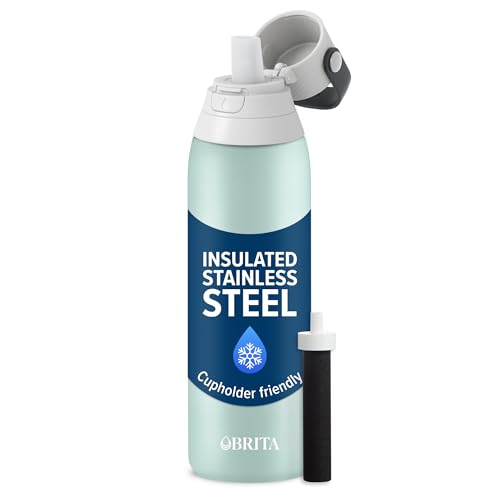
1. Brita Stainless Steel Filtering Water Bottle
Best for: Commuters wanting colder filtered water
The Brita Stainless Steel Premium Filtering Water Bottle is a 20-ounce reusable bottle with a double-wall insulated body. Its stainless steel construction keeps water cold for up to 24 hours, while the included activated carbon block filter reduces chlorine taste, chlorine odor, and some particulates. The bottle costs under $25, making it a relatively low-cost option for daily hydration.
Its design focuses on quick access. An easy-sip straw, one-handed push-button lid, and built-in carrying loop make it practical for commutes, errands, and workouts. Brita says each filter can replace up to 300 standard 16.9-ounce plastic bottles, but that depends on regular use and proper filter changes. The filter should be replaced after 40 gallons or about two months. This is a filter bottle, not a purifier, so it does not remove every possible contaminant from tap water.
Pros
- Double-wall insulation keeps water cold for up to 24 hours.
- Activated carbon filtration reduces chlorine taste, odor, and particulates.
- Push-button lid, straw, carrying loop, and leakproof construction support easy daily use.
Cons
- The 20-ounce capacity may feel small for long trips or extended workouts.
- Replacement filters add an ongoing cost and must be changed every 40 gallons or two months.
Buying Guide
The most important factor is what the filter removes. Many travel bottles reduce bacteria, parasites, chlorine, and odors, but standard filters may not remove viruses or industrial chemicals.
- Filtration claims: Choose a model with independent testing, such as NSF/ANSI 42 for chlorine or NSF P231 for microbial reduction. For questionable tap water, use a purifier rated for viruses, bacteria, and protozoa.
- Capacity and flow: A 20–32-ounce bottle, or 600–950 milliliters, suits day trips without adding much weight. Look for a flow rate that fills a cup in about 30–60 seconds.
- Filter lifespan: Compare replacement life in liters or gallons. A range of 150–1,500 liters is common across designs, but carry one spare cartridge for trips longer than two weeks.
- Leak protection: Pick a bottle with a locking cap, silicone gasket, and a wide opening. A 2.5–3-inch opening makes cleaning easier and helps prevent trapped residue.
- Travel size and cost: An empty bottle under 1 pound and 8–11 inches tall fits most daypacks. Budget $25–$60 for the bottle, then check that replacement filters cost $10–$40.
If you cannot have everything, prioritize verified filtration for the water risks at your destination.
Frequently Asked Questions
How do I choose a filtered water bottle for international travel?
Choose a travel filter bottle certified for the specific contaminants you may encounter, such as bacteria, parasites, lead, or chlorine. Check the certification standard and replacement schedule before buying. A purifier may target viruses, while many basic filters do not. Look for a capacity around 500 to 750 milliliters.
What does a travel water filter remove from tap water?
A travel water filter may remove bacteria, parasites, sediment, chlorine, or some metals, depending on its filter type and certification. It may not remove viruses, salt, fuel, or every chemical. For example, a carbon filter can improve taste, while a purifier rated for viruses offers broader protection.
Can I use a filtered bottle with water from any country?
No, you should not use a filtered bottle with water from every country or source without checking its rated protection. Follow local advisories and avoid visibly polluted water, seawater, and floodwater. If a product lacks virus protection, use sealed water or boil questionable water for at least one minute.
Are filtered water bottles worth packing for overseas trips?
Filtered water bottles can be worth packing when safe refill points are limited, but they cannot replace local water guidance or careful sanitation. They reduce plastic waste and may lower daily bottled-water costs. A 650-milliliter bottle usually fits a day bag, yet replacement cartridges add recurring cost.
Conclusion
Brita Stainless Steel Filtering Water Bottle is the top pick for travelers who want a durable, reusable bottle with familiar filter replacement options and a stainless steel body. If your priority is treating questionable water more aggressively than improving tap-water taste, choose a purifier-style bottle such as the Grayl GeoPress, but expect a different size, price, and replacement routine. Before buying, double-check the bottle’s size for your day bag and refill habits, filter compatibility with the exact model and destination, included filter quantity, current price, and replacement availability. Also check airline and airport rules, since filled bottles may not pass security and some trips lack dependable refill points.