
5 Best Cleaner for Bamboo Floors for Pet Owners
Rock Doctor Flooraid+Bamboo Floor Cleaner is the best cleaner for bamboo floors for most buyers because it is made for bamboo and wood surfaces, making routine cleaning simple. It targets tracked-in dirt, light grease, and dull residue without leaving a waxy-looking finish.
This guide is for homeowners who want to protect bamboo flooring while keeping regular cleaning manageable. For this product type, the key factors are surface compatibility, residue after drying, cleaning strength, and bottle capacity. A gentle formula matters because harsh cleaners can damage the finish or leave buildup over time. The five picks below are ranked with clear reasons and honest drawbacks for each, so you can match a floor cleaner to your rooms, cleaning habits, and budget.
Quick Comparison
| # | Product | Best For | Price | |
|---|---|---|---|---|
| 1 | Rock Doctor Flooraid+Bamboo Floor Cleaner | Bamboo Floor Care | $20.38 | View → |
| 2 | Bona Hardwood Floor Cleaner Refill | Refill-Conscious Hardwood Owners | $19.97 | View → |
| 3 | Bona Hardwood Floor Cleaner Spray | Quick Spray Touch-Ups | $8.97 | View → |
| 4 | Better Life Multipurpose Floor Cleaner | Multi-Surface Household Cleaning | $23.99 | View → |
| 5 | Aunt Fannie's Hardwood Floor Cleaner 32 oz | Natural Ingredient Floor Care | $14.99 | View → |
5 Top Cleaners for Bamboo Floors
The cleaners below are ranked by floor-safe formulas, residue control, and value, counting down to the top pick.
5. Aunt Fannie’s Hardwood Floor Cleaner 32 oz

Best for: Routine cleaning of sealed wood floors
Aunt Fannie’s Hardwood Floor Cleaner is a 32-ounce, lemon-scented concentrate for regular floor care. The plant-based formula does not contain vinegar, and it is made for solid, engineered, bamboo, manufactured, and laminated wood floors. Mix 1/2 cup with 2 gallons of water, then use the solution in a mop bucket, floor-cleaning machine, or spray bottle. One bottle makes about eight two-gallon batches, or 16 gallons of diluted cleaner.
The main draw is its simple, no-rinse process. The brand says the formula leaves no residue, so you can mop and let the floor dry without a second pass. Its bright lemon essential-oil scent may appeal to shoppers who dislike vinegar-based cleaners. Aunt Fannie’s also identifies this product as dermatologist tested, hypoallergenic, safe around children and pets, and EWG A-rated. At around $15 for one bottle, it costs more upfront than many basic floor cleaners, but the concentrate lasts longer than a ready-to-use spray.
Pros
- Works across several wood types, including engineered, bamboo, and laminated floors.
- Concentrated 32-ounce bottle makes about 16 gallons of diluted cleaner.
- No-rinse formula and lemon scent suit routine mopping.
Cons
- The 1/2-cup-per-2-gallon mix requires measuring before each cleaning session.
- Lemon essential-oil fragrance may bother people who prefer unscented products.
4. Better Life Multipurpose Floor Cleaner

Best for: Routine cleaning on sealed hard floors
Better Life Floor Cleaner comes as two 32-fluid-ounce bottles, or 64 ounces total. The Citrus Mint formula is made for routine mopping on sealed hardwood, tile, marble, laminate, vinyl, bamboo, and similar hard surfaces. At around $24 for the two-pack, it fits households that clean several rooms each week.
The formula skips petroleum solvents, chlorine, bleach, added alcohol, parabens, SLS, and SLES. It also uses some plant-based ingredients, which may appeal to homes with children or pets. Apply a small amount directly to the floor, then use a damp mop. No rinsing is required. The cleaner targets everyday messes such as toothpaste, pet drool, muddy footprints, smudges, and spills. Its main strength is broad surface coverage. One bottle can handle several sealed floor types instead of requiring a separate product for each room. Still, the “a little goes a long way” guidance means results depend on using the right amount and a clean mop head.
Pros
- Works on sealed wood, tile, marble, laminate, vinyl, and bamboo.
- Avoids chlorine, bleach, petroleum solvents, and several common additives.
- No-rinse use saves a step after mopping.
Cons
- Not intended for unsealed wood or other floors that cannot tolerate moisture.
- Light-duty formulas may need extra passes for greasy, ground-in, or heavily soiled areas.
3. Bona Hardwood Floor Cleaner Spray
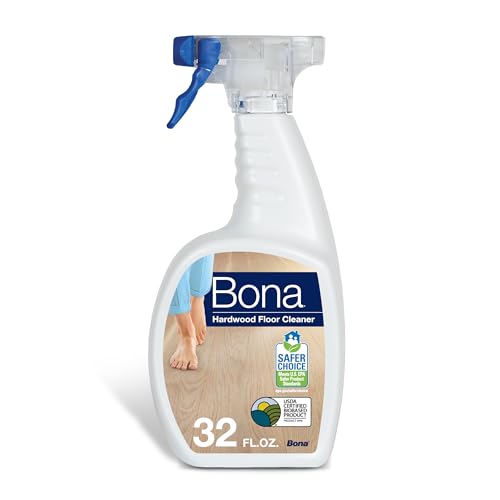
Best for: Routine cleaning of sealed hardwood floors
Bona Hardwood Floor Cleaner Spray is a 32 fl oz ready-to-use cleaner for unwaxed, unoiled wood floors with polyurethane finishes. Spray it onto the floor, mop with a microfiber pad, and refill the bottle when empty. Its pH-neutral formula lifts dust, dirt, and grime without leaving a visible film. At under $10, it is a low-cost option for regular floor care.
The formula dries quickly, which helps reduce wet spots and delays between cleaning and walking across the floor. Bona lists 95% USDA certified biobased content, and the product meets U.S. EPA standards with Safer Choice certification. The spray bottle also uses 30% post-consumer recycled plastic. For larger homes, you can refill it with an economy-size Bona cleaner refill or a Bona concentrate packet. A Bona Microfiber Mop and Cleaning Pad may improve results, but both are separate purchases.
Pros
- pH-neutral cleaner is designed for polyurethane-finished hardwood floors.
- 32 fl oz spray bottle offers simple, ready-to-use application.
- Uses 95% USDA certified biobased content and 30% recycled plastic.
Cons
- It is not intended for unwaxed, unoiled floors without a polyurethane finish.
- Refilling requires Bona economy-size cleaner or Bona concentrate packets, which limits refill choices.
2. Bona Hardwood Floor Cleaner Refill

Best for: Regular cleaning of sealed hardwood floors
Bona Hardwood Floor Cleaner Refill comes in a large 128-fluid-ounce bottle for refilling compatible Bona spray bottles and mop cartridges. The unscented, pH-neutral formula is designed for unwaxed, unoiled wood floors with a polyurethane finish. It removes everyday dust, dirt, and grime without leaving a cleaning film, then dries quickly.
This refill costs around $20, which can reduce the need to buy smaller cleaner bottles. Its splash-resistant design and wide handle should make pouring more controlled, although careful handling still matters with a container this size. The formula contains 95% USDA-certified biobased content and meets U.S. EPA product standards for Safer Choice certification. The bottle uses 30% post-consumer recycled plastic. Packaging can vary, so the container may not look exactly like the pictured version.
Pros
- The 128-fluid-ounce size provides a substantial supply for regular floor cleaning.
- Its pH-neutral formula suits polyurethane-finished, unwaxed, unoiled wood floors.
- Unscented, fast-drying cleaner leaves no residue when used as directed.
Cons
- It is not intended for waxed, oiled, or other floor finishes outside the listed wood-floor type.
- The refill requires a compatible Bona spray bottle or mop cartridge, and the large bottle may be awkward to store or pour.
1. Rock Doctor Flooraid+Bamboo Floor Cleaner

Best for: Routine bamboo floor maintenance
Rock Doctor Flooraid+Bamboo Floor Cleaner comes as two 24-ounce spray bottles. The formula targets bamboo and other hard-floor surfaces, helping lift everyday dirt and grime without abrasive scrubbing. Spray it onto the floor, wipe it away, and skip the rinsing step. At around $20 for the pair, it offers a practical supply for regular cleaning.
What sets this cleaner apart is its focus on bamboo’s appearance, not just surface cleanup. Rock Doctor says the formula helps refresh the wood, restore natural color, and support long-term resilience without leaving a greasy or sticky film. The product is made in the USA, which may appeal to shoppers who prefer domestic manufacturing. Still, these are care claims from the manufacturer, not a guarantee for every bamboo finish. Check your flooring maker’s cleaning guidance before applying it widely.
Pros
- Two 24-ounce bottles provide 48 ounces of ready-to-use cleaner.
- Spray-and-wipe use requires no rinsing after cleaning.
- Non-abrasive formula is designed to avoid excess dryness or dullness.
Cons
- The bamboo-focused formula may not suit every hard-floor material or finish.
- The listing does not state how many square feet each bottle covers.
Buying Guide
The most important factor is a pH-neutral formula made for sealed wood or bamboo. Bamboo can swell, dull, or develop residue when exposed to excess water, harsh chemicals, or waxy ingredients.
- Formula: Choose a cleaner labeled pH neutral, usually around 6 to 8, with no bleach, ammonia, abrasive powder, or oil-based soap. Avoid products that promise a glossy wax coating.
- Moisture control: Pick a spray or concentrate that leaves a light mist, not a wet layer. A 24- to 32-ounce spray bottle suits small homes, while a 32-ounce concentrate covers more rooms.
- Floor compatibility: Confirm the label lists bamboo, sealed hardwood, or polyurethane-finished floors. Do not use a product intended only for unfinished wood, laminate, or tile.
- Residue and rinsing: Select a no-rinse formula that dries within 5 to 10 minutes. If the label requires rinsing, it may leave too much moisture for routine bamboo care.
- Cost and packaging: Expect about $8 to $18 for 24 to 32 ounces. A refill pouch or two-pack can reduce cost, but only if the formula matches your finish.
If you cannot have everything, prioritize a pH-neutral, bamboo-safe formula over fragrance, shine, or bulk packaging.
Frequently Asked Questions
How do you choose a cleaner for bamboo floors?
Choose a pH-neutral, residue-free cleaner labeled safe for bamboo floors. Avoid wax, oil soap, bleach, ammonia, and abrasive powders because they can dull the finish or leave buildup. For routine care, dilute a concentrated formula exactly as directed, often 1 to 2 ounces per gallon of water.
What cleaner is safe for bamboo flooring?
A pH-neutral cleaner made for sealed wood or bamboo flooring is generally safe, provided the label permits bamboo use. Spray it lightly onto a microfiber mop rather than soaking planks. A 32-ounce ready-to-use bottle can cover several rooms, but follow the maker’s coverage estimate and dry damp spots promptly.
Can I use vinegar to clean bamboo floors?
You can use diluted vinegar only when the flooring manufacturer approves it; otherwise, use a pH-neutral bamboo-safe floor cleaner. Vinegar’s acidity may affect some finishes over time, especially with frequent use. If the care guide gives no vinegar ratio, skip homemade mixtures and choose a labeled product instead.
Are steam mops good for bamboo floors?
No, steam mops are not a good choice for most bamboo floors because heat and moisture can seep into seams, causing swelling, cupping, or finish damage. Use a barely damp microfiber mop instead. Clean small areas, then allow the surface to dry within a few minutes.
Conclusion
Rock Doctor Flooraid+Bamboo Floor Cleaner is the top recommendation for homeowners who want a purpose-made option for routine bamboo-floor care without sorting through many formulas. If your priority is a lower-cost choice, pick a pH-neutral cleaner that clearly lists bamboo and wood floors on its label, since broad floor products may not suit every finish. Before buying, double-check the bottle size, compatibility with your floor’s finish, quantity in the package, and current price, because online listings can change and larger containers are not always the better value. Whichever formula you choose, follow the label, use only the recommended amount, and keep excess water away from bamboo planks to reduce the chance of surface damage over time.