
5 Best Solar Generator for Refrigerator Backup
For most buyers, the Jackery 1000 v2 Solar Generator is the best solar generator for refrigerator use because its 1,070Wh battery and 1,500W output balance runtime with enough power for typical compressor starts. It is a portable power station suited to short outages, camping, and emergency food storage. Its compact design also makes storage easier than with larger backup systems.
This guide is for homeowners, renters, and campers who need refrigeration during power interruptions. Battery capacity matters most because it determines how long the appliance can run. Inverter output matters too, since refrigerators often draw extra power when the compressor starts. Solar recharge time, outlet options, and battery chemistry also affect daily use. The 5 picks below are ranked with clear reasons and honest drawbacks for each.
Quick Comparison
| # | Product | Best For | Price | |
|---|---|---|---|---|
| 1 | Jackery 1000 v2 Solar Generator | Best for solar-powered emergency backup | $699.00 | View → |
| 2 | Anker SOLIX S2000 Portable Power Station | Best for high-demand outdoor power | $649.99 | View → |
| 3 | BROWEY Portable Power Station | Best for budget-friendly portable charging | $799.00 | View → |
| 4 | Jackery 300 Solar Generator with Solar Panel | Best for lightweight camping trips | $339.00 | View → |
| 5 | Jackery Explorer 2000 v2 Portable Power Station | Best for extended home backup | $1,399.00 | View → |
5 Top Solar Generators for Refrigerators
These refrigerator-ready solar generators are ranked by backup capacity, output, and useful features, counting down to the top pick.
5. Jackery Explorer 2000 v2 Portable Power Station

Best for: Home outage backup and car camping
The Jackery Explorer 2000 v2 pairs a 2,042Wh portable power station with two 200W solar panels. Its three AC outlets deliver up to 2,200W, enough for many appliances, tools, and small-business equipment. A 100W USB-C port can charge laptops and other devices without a separate adapter. At 39.5 pounds, the unit is easier to move than many 2kWh LiFePO4 stations, though it remains too heavy for casual backpacking.
Charging is flexible. AC power reaches 80% in 66 minutes, while Emergency Super Charging can reach full capacity in about 102 minutes through the app. The included 400W solar setup takes about six hours under suitable conditions. Silent Charging drops noise to 30dB and takes about five hours. LiFePO4 cells are rated for up to 10 years of performance. A 20ms transfer time supports backup use for some critical devices, and the fume-free design works indoors with proper placement. At around $1,399, this is a serious investment.
Pros
- 2,042Wh capacity and 2,200W AC output cover many household and work devices.
- Two 200W panels provide a renewable charging option away from outlets.
- LiFePO4 battery, low-noise charging, and no exhaust suit indoor backup use.
Cons
- The 39.5-pound power station is still cumbersome for long-distance carrying.
- Solar charging depends on strong sunlight, and the included panels may ship separately.
4. Jackery 300 Solar Generator with Solar Panel

Best for: Weekend camping and emergency backup
The Jackery Solar Generator 300 combines a 292Wh Explorer 300 power station with a 40W solar panel. At 7.5 pounds, it is easy to carry in a vehicle or camping kit. Its 300W rated output, with 600W surge capacity, supports laptops, cameras, drones, and other small electronics. Connections include two AC outlets, one 100W USB-C PD port, two USB-A ports, and a 120W car outlet. The package also includes an AC adapter, car charging cable, and user guide.
Its LiFePO4 battery chemistry is the main standout. Jackery rates it for more than 4,000 cycles before reaching 70% capacity, which could support over 11 years of regular use. Solar charging is practical but slow with the included panel. Reaching 80% takes about 7.5 hours under suitable conditions. A 100W Jackery panel can reduce that time to roughly 2.8 hours. Around $340, this kit offers useful port variety in a compact package, though the limited output and small panel restrict heavier backup use.
Pros
- Lightweight 7.5-pound design with an integrated carrying handle.
- Six charging options, including a 100W USB-C port and two AC outlets.
- LiFePO4 battery rated for over 4,000 cycles to 70% capacity.
Cons
- The 40W panel needs about 7.5 hours to reach 80% capacity.
- The 300W output cannot power high-draw appliances such as heaters, microwaves, or most full-size refrigerators.
3. BROWEY Portable Power Station
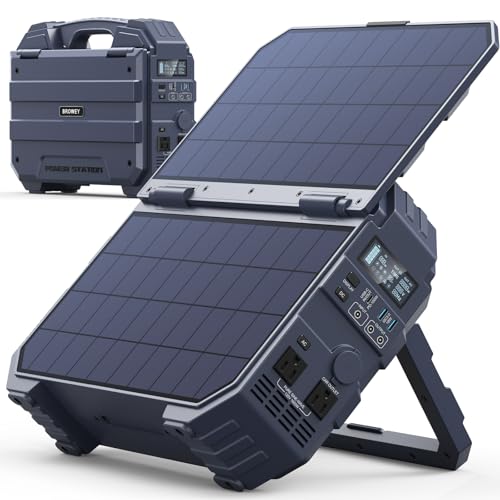
Best for: campers needing quiet backup power
The BROWEY S1600 is a portable power station with a 1,024Wh LiFePO4 battery, 1,600W pure sine wave output, and a 3,200W peak rating. It includes eight AC, DC, and USB ports, with a 100W USB-C PD connection for compatible laptops, tablets, and other devices. The battery management system protects against overvoltage, overheating, and short circuits.
Its built-in solar panel gives this unit a different setup than most battery stations. The panel supports up to 40W of solar input, and the system can accept extra solar panels for faster charging. It can also power devices while charging from sunlight. AC power and USB-C input used together can restore 80% capacity in about three hours. The LiFePO4 cells are rated for more than 3,000 cycles before reaching 80% capacity, though actual lifespan depends on use and storage.
Pros
- 1,600W output can support refrigerators, CPAP machines, tools, and small appliances.
- LiFePO4 cells offer a longer cycle life than many standard lithium batteries.
- Built-in solar charging reduces the number of separate accessories needed outdoors.
Cons
- The 40W built-in solar input is slow for a 1,024Wh battery, especially after several cloudy hours.
- A 1,600W load will drain the battery quickly, and usable capacity will be lower than the rated figure after power conversion losses.
2. Anker SOLIX S2000 Portable Power Station
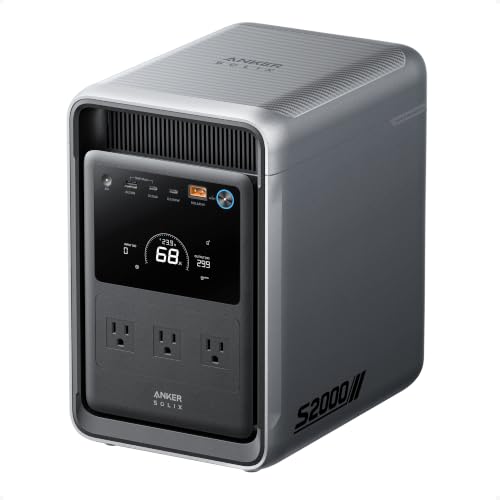
Best for: Refrigerator and office backup
This portable power station stores 2,010Wh and delivers 1,500W continuously, with up to 3,000W for startup surges. It can run many household essentials, including a refrigerator, though actual runtime depends on the appliance, temperature, and usage. The front and rear layout provides eight outlets, while the rear side suits devices you want left connected. A UPS mode switches in under 10 milliseconds, which fits a home-office setup.
The S2000 uses a 314Ah lithium iron phosphate battery rated for up to 10,000 cycles. Anker claims up to 35 hours of refrigerator backup, based on a 6W idle draw. Its 8.2 by 11.1 by 12.7-inch body and 35.7-pound weight are manageable for a 2kWh unit. Recharging supports wall power, solar up to 400W, a generator, alternator charger, or car outlet. That flexibility helps during outages and travel, but the unit costs around $650 and includes only the power station, quick-start guide, and safety and warranty card.
Pros
- LFP cells support up to 10,000 charge cycles.
- Eight outlets and rear connections help keep cables organized.
- Under-10ms UPS switching protects connected office electronics.
Cons
- There is no 12V DC port for compatible vehicle and camping gear.
- At 35.7 pounds, it is portable but not easy to carry long distances.
1. Jackery 1000 v2 Solar Generator

Best for: camping, outages, and road trips
This package combines a portable battery power station with a 200W foldable solar panel. Its 1,070Wh LFP battery feeds three pure sine wave AC outlets, two USB-C ports, one USB-A port, and a 12V car port. The 1,500W continuous output and 3,000W surge rating can support selected appliances, including refrigerators, electric pots, and some air conditioners. Runtime depends on each appliance’s power draw. At 23.8 pounds, it suits car camping better than long backpacking trips.
Charging is the main attraction. Standard AC charging takes about 1.7 hours, while the Jackery app can enable a full charge in one hour. You must turn on that emergency setting before charging. The included solar panel reaches 80% in about six hours under suitable conditions. A 600W alternator charger can fill the battery in three hours, but it is not included. The app also offers a 30 dB overnight mode. Jackery rates the LFP battery for more than 4,000 cycles while retaining over 70% capacity. Five years of coverage are included. At around $700, this is a capable but sizable investment.
Pros
- 1,500W output and 3,000W surge capacity support many household and camping appliances.
- Two USB-C ports include 100W power delivery for compatible devices.
- LFP battery supports a rated lifespan of over 4,000 charge cycles.
Cons
- The 200W panel takes about six hours to reach 80%, and solar speed depends on sunlight.
- The generator and panel ship separately, so the package may not arrive together.
Buying Guide
The most important factor is usable battery capacity, measured in watt-hours, because a refrigerator cycles on and off during an outage. Match that capacity with enough inverter surge power, since compressor startup may draw two to three times the normal wattage.
- Usable capacity: Choose at least 1,000Wh for roughly 8 to 12 hours with an efficient refrigerator, or 2,000Wh for overnight coverage. Actual runtime depends on cycling and power losses.
- Inverter output: Look for 1,500W of continuous output and at least 3,000W of peak output. Check your refrigerator label if its running draw exceeds 700W.
- Recharge options: Solar input of 400W or more can refill a 1,000Wh to 2,000Wh battery during strong sunlight. Wall charging under 2 hours helps before storms.
- Battery chemistry: LiFePO4 batteries typically provide about 3,000 or more charge cycles, compared with roughly 500 to 1,000 cycles for many standard lithium-ion models.
- Ports and protection: Choose pure sine-wave AC output, low-battery shutdown, overload protection, and at least two AC outlets. A display showing watts and remaining hours is useful.
If you must compromise, prioritize usable capacity after confirming the inverter can handle compressor startup.
Frequently Asked Questions
How large should a solar generator be to run a refrigerator?
Choose a solar generator with at least 1,000 watt-hours and a 2,000-watt inverter for most household refrigerators. A typical fridge may use 60 to 150 watts while running, but its compressor can briefly need 800 to 1,200 watts when starting. Larger French-door models or extra freezer use may call for 1,500 watt-hours.
What features matter in a refrigerator backup power station?
The key features are a pure sine wave inverter, pass-through charging, clear battery data, and multiple output ports. Pure sine wave power suits modern refrigerator controls, while pass-through charging can keep the appliance running during a utility outage and recharge from panels later. Look for a display that shows watts, battery percentage, and estimated runtime.
Can a solar generator run a fridge overnight?
Yes, a properly sized solar generator can run a refrigerator overnight, provided its usable battery capacity covers the appliance’s energy use. A fridge averaging 80 watts for 10 hours needs about 800 watt-hours before inverter losses, so a 1,000 to 1,500 watt-hour unit gives a safer margin.
Are portable power stations safe for refrigerators?
Yes, portable power stations are generally safe for refrigerators when their inverter rating, outlets, and operating limits match the appliance. Use a grounded AC outlet, avoid extension cords when possible, and leave ventilation space around the unit. A 2,000-watt inverter handles many compressors, but check the fridge label for startup watts first.
Conclusion
Jackery 1000 v2 Solar Generator is the top pick for shoppers who want portable backup power for common refrigerator outages. If your priority is longer runtime between charges, choose a higher-capacity solar power station instead, even if its larger battery adds weight and cost. Before buying, double-check the generator’s physical size, refrigerator compatibility, the quantity of power stations or panels included, and the current price.
Pay close attention to your refrigerator’s startup demand, not just its running wattage. A unit that looks powerful on paper may shut down when the compressor starts. Keep a small margin for other essentials, such as lights, phones, or a modem. The right choice balances runtime, storage space, charging options, and budget.