
7 Best Deep Cycle Marine Battery Picks for Ultimate Power
Choosing the right deep‑cycle marine battery can mean the difference between a calm, reliable cruise and a night‑marred power failure that leaves you stranded in the dark. Whether you’re powering a weekend sailboat, an offshore fishing vessel, or a tiny house on a dock, the battery you trust must deliver consistent energy, withstand harsh salt‑air conditions, and hold up over countless charge cycles. With so many brands and chemistries on the market, it’s easy to feel overwhelmed by specifications and marketing hype. In this post we cut through the noise, testing performance, durability, and value to bring you the top 7 best deep‑cycle marine batteries currently available, so you can make an informed choice and stay powered wherever the water takes you.
Top Deep Cycle Marine Batteries for Ultimate Performance
We’ve tested countless options, and these seven models deliver unmatched reliability, power, and longevity for demanding marine applications.
7. Interstate Batteries 31-AGM5 Marine Battery
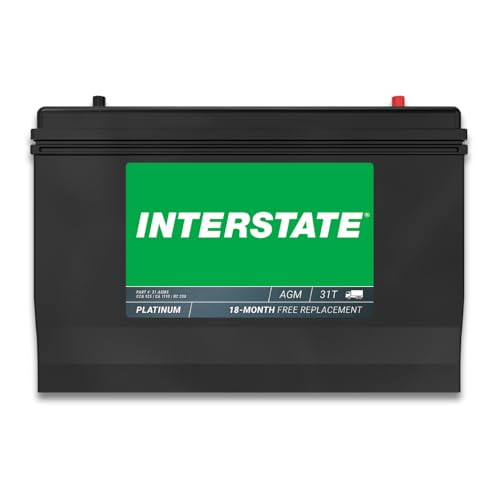
Interstate Batteries’ Marine Deep Cycle Battery (12 V 100 Ah 925 CCA, Group 31) is a rugged 2‑in‑1 pure‑lead AGM power source built for the toughest marine environments. Engineered with thick, high‑density plates, it delivers both high‑cranking strength for starting engines and sustained deep‑cycle output for auxiliary loads such as trolling motors, audio systems, depth finders, fish locators, and windlasses. The AGM (Absorbent Glass Mat) design eliminates spills, resists vibration, and operates efficiently in a wide temperature range, making it ideal for APU, auxiliary units, and heavy‑duty applications. Interstate’s 70‑year legacy of “Outrageously Dependable” power is reflected in the battery’s long service life—up to three times longer than conventional flooded batteries and twice as long as typical alloy‑lead AGM units. When the battery reaches end‑of‑life, Interstate’s robust recycling program ensures responsible disposal.
Pros
- Extreme deep‑cycle + high cranking power – handles both engine start‑up and continuous accessory load.
- Extended service life – 2‑3× longer than flooded or standard AGM batteries, reducing replacement frequency.
- Spill‑proof AGM construction – vibration‑resistant, low maintenance, safe for marine use.
Cons
- Higher upfront cost compared with standard flooded marine batteries.
- Not compatible with automotive or mobility‑device applications; intended solely for marine use.
6. Interstate Batteries 12V 100Ah Marine/RV Battery

Interstate’s Marine/RV Battery is a 12 V, 100 Ah AGM unit (Group 31M) built to handle both starting and deep‑cycle demands. Whether you’re launching a boat, powering a trolling motor, or running appliances in an RV, this pure‑lead battery delivers high‑cranking power and sustained energy for lights, pumps, TVs, and more. Its thick‑plate construction gives it 2‑3 × the service life of traditional AGM or flooded batteries, recharging faster and staying reliable through countless cycles. Designed “Interstate tough,” it resists vibration, temperature extremes, and harsh marine conditions, so you can focus on the adventure instead of worrying about power loss. Interstate also backs the battery with a strong environmental commitment—more batteries are recycled than sold, and you can return used units to any Interstate All Battery Center.
Pros
- Dual‑purpose performance – works as a starter and deep‑cycle battery in one compact package.
- Extended lifespan – up to 2× longer than alloy AGM and 3× longer than flooded batteries, with faster recharge times.
- Rugged, marine‑grade construction – thick plates and AGM technology resist vibration, sulfation, and extreme temperatures.
Cons
- Higher upfront cost compared with standard flooded batteries.
- Weight – at 100 Ah the unit is heavier than some lightweight alternatives, which may affect portable setups.
5. Newport 12V50Ah Sealed AGM Marine Battery

The Newport 12V 50Ah Deep Cycle Heavy‑Duty Marine Battery delivers the power and reliability every boater expects, while staying light enough to handle with ease. Weighing just 32 lb, this AGM‑sealed lead‑acid battery can be lifted, positioned, and secured without the hassle of a heavyweight unit, making installation in tight cockpit or cabin spaces a breeze. Its sealed AGM construction means no spills, no maintenance, and a rugged, leak‑proof design that stands up to the harsh marine environment. Engineered specifically for trolling motor compatibility, the battery provides a steady 12 V output and a generous 50 Ah capacity, ensuring long runs on the water and ample reserve for lights, electronics, and accessories. Whether you’re cruising, fishing, or simply enjoying a day on the lake, this deep‑cycle battery offers consistent performance you can count on.
Pros
- Lightweight (32 lb) – easy to transport, install, and reposition on any vessel.
- Sealed AGM technology – completely leak‑proof, maintenance‑free, and highly resistant to vibration and temperature extremes.
- Optimized for trolling motors – delivers steady power for prolonged motor use without premature depletion.
Cons
- Fixed 12 V output – not suitable for systems requiring higher voltage configurations.
- Lead‑acid chemistry – while reliable, it is heavier and has a shorter cycle life compared to lithium alternatives.
4. WEIZE 12V 100Ah Deep Cycle Battery

The WEIZE 12 V 100 Ah deep‑cycle battery is a rugged, sealed‑lead‑acid solution built for the demands of RVs, solar rigs, cabins, marine vessels, and off‑grid setups. Its compact 12.99 × 6.73 × 8.43 in. footprint replaces the popular UB121000 and Renogy 100 Ah units, offering a spill‑proof, maintenance‑free design that’s ready to go right out of the box. Each battery ships with mounting screws and a clear terminal layout—positive (+) on the left (red) and negative (–) on the right (black)—so installation is straightforward, even without a wire harness. With a massive 1150 A max discharge current and a low 3 % self‑discharge rate, it can power everything from wheelchair‑assist motors and trolling motors to UPS systems, electric golf carts, and emergency lighting. The sealed construction makes it safe for indoor and outdoor use, and its versatility extends to commercial environments such as schools, healthcare facilities, and property‑management operations.
Pros
- High discharge capability (1150 A) handles heavy‑load starts and sustained power draws.
- Low self‑discharge (3 %) keeps the battery ready for infrequent use, ideal for seasonal equipment.
- Spill‑proof, maintenance‑free design eliminates the need for regular topping‑up, reducing upkeep.
Cons
- No integrated wire harness or mounting bracket; users must source or fabricate their own wiring solution.
- Sealed lead‑acid chemistry is heavier than lithium alternatives, which may be a consideration for weight‑critical applications.
3. OPTIMA Batteries D34M Deep Cycle Battery

The OPTIMA Batteries High‑Performance D34M BlueTop is a rugged 12‑volt AGM battery built for both deep‑cycle and cranking demands on boats, RVs, and off‑road rigs. Measuring 10.06″ L × 6.88″ W × 7.94″ H and weighing 43.5 lb, it delivers 750 Cold Cranking Amps (CCA) and a C20 capacity of 55 Ah, giving you reliable starts even in cold or inclement weather. Its SpiralCell technology—using 99.99 % pure lead plates—provides a higher power density and faster charging than traditional flat‑plate designs, while a 120‑minute reserve capacity ensures continuous performance during extended use. Dual SAE and 5/16″ stainless‑steel stud posts give flexible mounting options, and the sealed AGM construction means it’s completely maintenance‑free. With fifteen‑times greater vibration resistance and up to three times the lifespan of standard flooded batteries, the D34M is engineered for the toughest marine and mobile environments.
Pros
- Dual‑purpose power: Handles deep‑cycle loads and high‑amp starts with 750 CCA.
- SpiralCell technology: Faster charging, higher power output, and superior cold‑weather performance.
- Durability: 15× vibration resistance and up to 3× longer life versus flooded batteries.
Cons
- Weight: At 43.5 lb, it’s heavier than many comparable AGM batteries, which may affect installation in tight spaces.
- Price: Premium technology and performance come at a higher upfront cost compared to standard flooded options.
2. Renogy D24-100

Renogy’s Deep Cycle AGM 12 V 100 Ah battery is engineered for the toughest off‑grid demands—whether you’re powering an RV, a remote cabin, a marine vessel, or a standalone solar system. The sealed AGM chemistry delivers exceptional safety and stability, eliminating the risk of acid leaks and the need for routine maintenance. An upgraded electrolyte formula keeps the battery delivering strong, consistent discharge from -4 °F up to 140 °F (‑20 °C – 60 °C), so you can rely on it in extreme climates. With a 1100 A (5 s) peak discharge capability, it easily runs high‑draw appliances such as a refrigerator, microwave, CPAP, coffee maker, or laptop without voltage sag. Its low self‑discharge rate—under 3 % per month at 77 °F (25 °C)—means the battery stays ready for months of storage, and the design supports unlimited series connections and up to four parallel units for scalable capacity.
Pros
- Robust performance in extreme temperatures – reliable power from -4 °F to 140 °F.
- High peak discharge (1100 A) – handles demanding appliances and short‑term surges.
- Low self‑discharge & maintenance‑free – stays charged for months without intervention.
Cons
- Weight – AGM construction makes the unit heavier than comparable lithium options, which can affect portability.
- Higher upfront cost – the premium safety and performance come at a larger initial price compared to basic lead‑acid batteries.
1. Weize Deep Cycle AGM 100Ah Battery
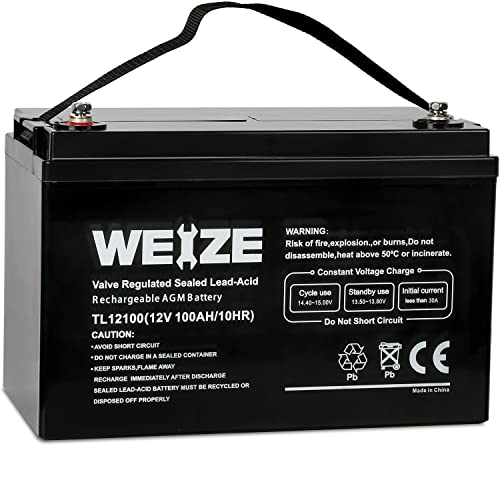
Weize’s 12 V 100 Ah AGM deep‑cycle battery is built for rugged, off‑grid adventures and everyday power needs. The sealed‑lead‑acid design uses an absorbent glass mat (AGM) that eliminates acid leaks and removes the hassle of regular topping‑up, so you can focus on the road, the water, or the campsite. With a compact footprint of 12.99 × 6.73 × 8.43 in, the battery fits neatly into RV compartments, marine lockers, or solar enclosures. Terminals are clearly marked—positive (+) red on the left, negative (‑) black on the right—for quick, error‑free connections.
Operating temperatures span from –10 °C (14 °F) while charging up to 50 °C (122 °F) during discharge, with an optimal 25 °C (77 °F) for peak performance. The unit can deliver a massive 1 100 A burst for 5 seconds, handling demanding loads such as trolling motors or inverter start‑ups. A low self‑discharge rate of just 1‑3 % per month means the battery stays ready after long storage periods, provided it’s kept charged and within temperature limits.
Pros
- Maintenance‑free AGM construction – no acid spills, no water topping, and hassle‑free installation.
- High surge capability (1 100 A) – perfect for motor start‑up and heavy inverter loads.
- Low self‑discharge (1‑3 %/mo) – retains charge during long idle periods, extending usable life.
Cons
- Limited warranty (1 year) – longer‑term peace of mind may require additional protection plans.
- Temperature sensitivity – extreme cold below –15 °C can reduce performance; keep the battery in a moderate environment when possible.
Buying Guide
When choosing a deep‑cycle marine battery, focus on capacity, reliability, and how well it handles the harsh marine environment. The right battery will deliver consistent power for trolling motors, refrigeration, and lighting while resisting vibration, salt, and temperature swings.
- Capacity (Ah) and discharge rate: pick a battery with enough amp‑hours and a low C‑rate for long, steady draws.
- Battery type: AGM or gel cells are sealed and maintenance‑free, while flooded lead‑acid is cheaper but needs water checks.
- Cycle life: choose a model with high charge‑discharge cycles and reinforced plates to resist sulfation.
- Cold‑cranking amps (CCA) and reserve capacity: ensure it can start the engine in cold water and hold voltage when the alternator is off.
- Warranty and reviews: pick a brand with a solid warranty and positive user feedback from real boaters.
Match these factors to your boat’s power needs and budget to find a deep‑cycle marine battery that performs reliably year after year. The right choice protects your equipment and gives you confidence on every trip.
Frequently Asked Questions
What factors should I consider when choosing the best deep‑cycle marine battery?
- Battery type: AGM, Gel, and Lithium‑Iron‑Phosphate (LiFePO₄) each have different weight, cost, and maintenance profiles.
- Capacity (Ah) and reserve capacity: Match the amp‑hour rating to your boat’s power draw and expected runtime.
- Cold‑cranking amps (CCA) and discharge rate: Ensure the battery can handle peak loads and the required discharge depth (typically 80 % DOD for deep‑cycle use).
- Size & weight: Space constraints and weight distribution affect installation and vessel stability.
- Maintenance requirements: AGM and Gel are sealed (no water topping), while flooded cells need periodic checks.
- Price vs. lifespan: Higher upfront cost (e.g., LiFePO₄) often yields a longer service life and lower total‑cost‑of‑ownership.
Which deep‑cycle marine battery offers the best overall performance for most recreational boats?
For the majority of recreational boaters, AGM (Absorbent Glass Mat) batteries strike the best balance of performance, durability, and price.
– Pros:
– Fully sealed – no venting or water topping.
– High discharge rates and good resistance to vibration.
– Low self‑discharge, making them ready after periods of inactivity.
– Popular models:
– Optima YellowTop 75 Ah – excellent for high‑current accessories (pumps, lights).
– Trojan T‑1275 (75 Ah) – proven reliability and wide service network.
If weight and long‑term cost are critical, a LiFePO₄ battery (e.g., Battle Born 100 Ah) may be the top choice, but it comes at a higher initial price.
How often should I maintain or replace my deep‑cycle marine battery?
- AGM & Gel: Minimal maintenance; simply keep terminals clean and check voltage monthly. Expect a service life of 4–6 years under typical use.
- Flooded (lead‑acid): Requires water topping, equalizing charges, and regular terminal cleaning. Lifespan is usually 2–4 years.
- Lithium‑Iron‑Phosphate: No water or equalization needed; monitor with a compatible battery management system (BMS). They can last 10 + years.
A good rule of thumb is to replace the battery when its capacity drops below 70 % of the original rating (you can verify this with a load test or a battery analyzer). Regularly inspecting for sulfation, swelling, or corrosion will also help you catch issues before a complete failure.
Conclusion
Choosing the right deep‑cycle marine battery hinges on balancing power capacity, durability, and maintenance requirements to match your vessel’s demands. Prioritize batteries that deliver consistent, reliable energy over long periods, resist the harsh marine environment, and offer a reasonable lifespan with minimal upkeep. Consider the trade‑offs between lead‑acid, AGM, and lithium‑ion options, weighing factors such as weight, charge efficiency, and upfront cost against long‑term performance and safety. By aligning these criteria with your boating habits—whether cruising, fishing, or live‑aboard—you’ll secure a power source that enhances reliability, extends range, and ultimately safeguards your time on the water.