
6 Best Underlayment for Bamboo Flooring for Quiet Rooms
For most buyers, Bestlaminate Flooring Underlayment Padding is the best underlayment for bamboo flooring, mainly because it offers a sensible balance of cushioning, moisture protection, and cost. Its straightforward design suits common room updates without pushing shoppers toward a specialized premium pad.
This guide is for homeowners, DIY installers, and anyone replacing carpet or laminate beneath bamboo planks. Focus first on the pad’s material and thickness, since they affect support, sound, and how the flooring feels underfoot. Check moisture protection and roll coverage too. A thin pad or undersized roll can create extra work and leave seams exposed. The six picks below are ranked with clear reasons and honest drawbacks for each, so you can compare basic foam, thicker cushioning, and options suited to different subfloors before buying.
Quick Comparison
| # | Product | Best For | Price | |
|---|---|---|---|---|
| 1 | Bestlaminate Flooring Underlayment Padding | Budget-Conscious Laminate Floor Installers | $25.99 | View → |
| 2 | AMERIQUE 4th Generation Flooring Underlayment | Moisture-Prone Room Renovators | — | View → |
| 3 | AMERIQUE Flooring Underlayment | DIY Floating Floor Installers | $92.00 | View → |
| 4 | VEVOR 3-in-1 Floor Underlayment Padding | Multi-Room Flooring Projects | $44.90 | View → |
| 5 | AMERIQUE 1.5mm Flooring Underlayment | Low-Profile Floor Transitions | — | View → |
| 6 | Amerique 1.5mm 3-in-1 Flooring Underlayment | Built-In Vapor Barrier Seekers | $109.00 | View → |
6 Top Underlayments for Bamboo Floors
These six underlayment options are ranked by protection, moisture control, and value, counting down to the top pick.
6. Amerique 1.5mm 3-in-1 Flooring Underlayment

Best for: Large floating-floor installations
The AMERIQUE flooring padding covers up to 800 square feet across four 200-square-foot rolls. Each roll uses 1.5mm closed-cell foam with a built-in moisture and vapor barrier. That setup fits engineered hardwood, bamboo, laminate, and other floating floor systems. The blue material also includes an adhesive strip and overlap design, so installers can join sections without buying separate seam tape. At around $109, the package costs roughly 14 cents per square foot before installation supplies.
Its main strength is coverage. One pack can handle a large room, several smaller rooms, or a full flooring project with fewer package purchases. The closed foam may help reduce everyday floor noise, while the moisture barrier adds protection beneath the finished surface. Anti-crush construction should help the padding retain its shape under normal use. Still, 1.5mm is a thin layer. It provides less cushioning and sound control than thicker underlayments. Buyers should also confirm that their flooring warranty allows this type of padding and barrier.
Pros
- Covers 800 square feet with four 200-square-foot rolls.
- Built-in vapor barrier helps limit moisture contact below floating floors.
- Adhesive strip and overlap edge simplify seam joining during installation.
Cons
- The 1.5mm thickness offers limited cushioning compared with thicker foam underlayments.
- Designed for floating floors and listed materials, so it may not suit every flooring installation.
5. AMERIQUE 1.5mm Flooring Underlayment

Best for: Large laminate flooring installations
The AMERIQUE flooring underlayment covers 800 square feet across four 200-square-foot rolls. Each roll uses 1.5mm closed-cell foam with a built-in vapor barrier. The material is designed for laminate, floating floors, engineered hardwood, and bamboo flooring. A blue surface makes the rolls easy to identify during installation.
The main advantage is its three-part setup. The foam provides a layer between the subfloor and finished flooring, while the vapor barrier helps limit moisture exposure. The product also includes tape and an adhesive strip, so adjoining sections should require fewer separate supplies. Its closed foam construction supports basic sound reduction and resists crushing under normal flooring use. Mold and moisture protection may suit rooms where humidity is a concern, although the underlayment cannot correct water problems in the subfloor itself. Since the pack covers 800 square feet, it fits whole-home or multi-room projects better than small repairs.
Pros
- Four 200-square-foot rolls cover up to 800 square feet.
- Vapor barrier and moisture protection add a layer beneath floating floors.
- Adhesive strip and included tape simplify joining each section.
Cons
- At 1.5mm, it provides less cushioning and sound control than thicker underlayments.
- The four-roll pack may leave substantial excess for a single small room.
4. VEVOR 3-in-1 Floor Underlayment Padding

Best for: Laminate floors in large rooms
The VEVOR underlayment includes three rolls, each covering 100 square feet, for 300 square feet total. Each roll measures about 333.46 by 43.31 inches and uses 2 mm thick EPE foam. That makes it a practical choice for wide flooring projects, especially when buying multiple smaller rolls would create more seams and waste. The total package costs around $45, or roughly 15 cents per square foot.
A PE film layer adds water resistance and helps block moisture from reaching laminate or engineered wood. Tape along the seams can hold adjoining sections together during installation, while the foam trims easily with a utility knife or scissors. It can soften hollow sounds from floating floors and reduce some noise from footsteps or moving furniture. The padding works with laminate, engineered wood, and other floating-floor systems. VEVOR specifically excludes vinyl flooring, so check your flooring manufacturer’s requirements before buying. This 2 mm layer provides basic support and moisture protection, but it is not a thick cushion for uneven subfloors.
Pros
- Covers 300 square feet with three 100-square-foot rolls.
- PE film creates a moisture-resistant vapor barrier.
- Built-in seam tape simplifies layout and cutting.
Cons
- Not suitable for vinyl flooring.
- The 2 mm thickness offers limited cushioning for uneven floors or heavier impact noise.
3. AMERIQUE Flooring Underlayment

Best for: DIY laminate floor installations
AMERIQUE’s 3mm flooring underlayment covers up to 400 square feet, making it suitable for many single-room projects. The closed-foam layer sits beneath wood, bamboo, or laminate flooring and includes a vapor barrier to help limit moisture reaching the finished floor. At around $92, it costs more than basic foam rolls, so the larger coverage area matters when comparing value.
Its anti-crush construction is designed to retain support under foot traffic, while the foam may reduce some impact and room noise. Mold and moisture protection adds practical value in areas where dampness is a concern, and the material is non-allergenic. Installation is simpler than loose-laid underlayment because one edge overlaps and the built-in adhesive strip holds the seam in place. You still need a clean, dry subfloor and careful cuts around walls, doorways, and vents. The 3mm thickness offers cushioning, but it should not be treated as a fix for major subfloor dips or bumps.
Pros
- Covers up to 400 square feet, useful for larger rooms or multiple small spaces.
- The vapor barrier and moisture protection help shield flooring from damp conditions.
- The overlap design and self-adhesive strip can speed up seam installation.
Cons
- The 3mm foam will not correct substantial subfloor unevenness.
- The $92 price is high for a basic underlayment, especially for smaller flooring projects.
2. AMERIQUE 4th Generation Flooring Underlayment
Best for: Large flooring installation projects
The AMERIQUE 4th Generation underlayment covers up to 800 square feet and uses 2mm-thick blue foam. It is designed for use beneath flooring as a three-part layer, combining cushioning, a vapor barrier, and adhesive tape. That setup can help create a cleaner base between the subfloor and finished flooring. Buyers should still confirm that this thickness matches their flooring manufacturer’s requirements.
Its anti-crush construction is the main standout. It is intended to resist compression over time, which may help the padding keep its shape beneath regular foot traffic and furniture. The built-in moisture barrier adds protection where dampness from the subfloor is a concern. The foam also aims to reduce sound, though the actual result depends on the flooring, subfloor, and room construction. Self-sticking tape makes joining sections simpler, but careful alignment still matters. With 800 square feet in one purchase, this option fits larger rooms or multi-room projects better than small repairs.
Pros
- Covers up to 800 square feet for larger flooring jobs.
- Combines 2mm foam, a vapor barrier, and joining tape in one underlayment.
- Anti-crush construction may help the padding retain its shape under pressure.
Cons
- The 2mm thickness offers less cushioning than thicker underlayment options.
- A large 800-square-foot quantity may create waste on small rooms or patch jobs.
1. Bestlaminate Flooring Underlayment Padding
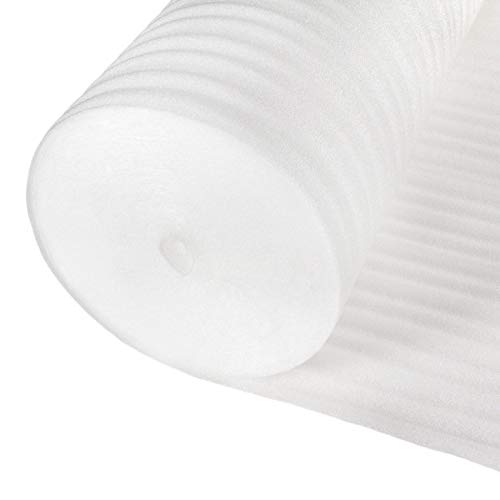
Best for: DIY laminate installs over wood subfloors
This Bestlaminate underlayment is a 2mm-thick padding layer for floating wood, bamboo, and laminate floors. It is designed for installation over wood subfloors, giving flooring planks a cleaner surface between the subfloor and finished floor. The white material comes in a 100-square-foot roll, which can cover a small room or part of a larger project. The roll measures 8 inches across and 45 inches long when packaged. Its price is around $26, making it a low-cost option for basic floor preparation.
The main appeal is its simple size and broad flooring compatibility. The thin profile should fit beneath floors that allow 2mm underlayment without creating excessive height at doorways or transitions. Bestlaminate also describes it as allergy friendly, resistant to static electricity, and naturally antibacterial. Those properties may suit bedrooms, offices, or homes where indoor air concerns matter. Still, buyers should check the flooring manufacturer’s requirements before installation, since not every floating floor accepts the same padding.
Pros
- Covers 100 square feet per roll, useful for small rooms.
- Works with wood and laminate flooring over wood subfloors.
- 2mm thickness adds a low-profile layer beneath floating floors.
Cons
- The thin 2mm layer may provide limited cushioning and sound reduction.
- No moisture protection or sound-control rating is listed.
Buying Guide
Moisture protection is the most important factor when choosing a pad for bamboo floors. Excess moisture can cause swelling, cupping, mold, or adhesive failure, especially over concrete slabs.
- Vapor barrier: For concrete, choose an underlayment rated at 0.1 perm or lower when the flooring maker requires a moisture barrier. Do not add plastic over wood subfloors unless specified.
- Installation method: Floating bamboo needs a compressible pad, while glue-down planks usually require an approved adhesive system instead. Confirm compatibility before buying.
- Thickness: A 2 to 3 mm pad suits many floating installations. Pads thicker than 3 mm can create excess movement and may void the floor warranty.
- Sound ratings: For apartments or upper floors, look for an IIC rating near 60 and an STC rating near 55 or higher. Ratings depend on the complete floor assembly, not the pad alone.
- Material and coverage: Closed-cell foam resists moisture, while cork can offer firmer support and sound control. Buy enough coverage for the room plus 5 to 10 percent waste, and check that each roll includes sealed seams or tape.
If you cannot have everything, prioritize the vapor rating and manufacturer approval over sound or cushioning.
Frequently Asked Questions
How thick should underlayment be for bamboo flooring?
For most floating bamboo floors, choose underlayment about 2 to 3 millimeters thick, unless the flooring maker specifies another option. Thicker material can make joints flex and may cause locking edges to separate. For example, a 2-millimeter foam pad can provide cushioning without raising the floor too much.
What type of underlayment works best under bamboo floors?
Use the type required by the installation method and subfloor, usually dense foam for floating planks and a thin compatible pad for other systems. Concrete floors often need a built-in vapor barrier, while wood subfloors may not. A 6-mil polyethylene film is a common moisture-barrier specification, but follow maker instructions.
Can I install bamboo flooring without an underlayment?
You can install bamboo flooring without a separate underlayment only when the product and installation method allow it, such as some glue-down systems. Floating planks usually need a pad for sound control and minor surface cushioning. Never use padding to hide unevenness. Subfloors generally need to stay within 3/16 inch over 10 feet.
Are bamboo flooring underlayment pads waterproof?
Most bamboo-flooring underlayment pads are not waterproof, even when they resist limited moisture. A pad with an attached vapor barrier can slow vapor movement, but it will not stop leaks or standing water. For example, sealed concrete installations may call for 6-mil polyethylene, with seams overlapped according to the flooring instructions.
Conclusion
Bestlaminate Flooring Underlayment Padding is the top pick for homeowners who want a straightforward cushion layer beneath bamboo planks and need basic sound and moisture control. If impact reduction or moisture protection matters more, choose an underlayment with a thicker foam core or an attached vapor barrier, depending on the subfloor and installation method. Before buying, double-check the roll or pack’s coverage size, compatibility with your bamboo flooring and subfloor, quantity needed, and current price. Also confirm the product fits floating, nail-down, or glue-down installation, since the wrong layer can affect plank movement and manufacturer coverage. A careful match helps prevent waste, squeaks, and avoidable installation problems.