
5 Best Compostable Bags for Kitchen Waste
UNNI 2.6-Gallon Compostable Bags are the best compostable bags for most buyers because their compact 2.6-gallon size fits many countertop food-scrap bins. Made for collecting kitchen waste, these liners offer a practical capacity for apartments, offices, and households that empty a small caddy often. They suit people who need a daily food-waste liner, not a large sack for outdoor yard debris.
This guide is for anyone choosing liners for a kitchen compost caddy. Focus first on bag size and material standards. A close fit helps prevent slipping, wasted space, and messy spills, while suitable compostable material matters for municipal or home compost systems. Thickness and closure design also affect daily use. The five picks below are ranked with clear reasons and honest drawbacks for each.
Quick Comparison
| # | Product | Best For | Price | |
|---|---|---|---|---|
| 1 | UNNI 2.6-Gallon Compostable Bags | Small countertop compost bins | $13.59 | View → |
| 2 | SUPERBIO 1.6 Gallon Compostable Food Scrap Bags | Daily kitchen food scraps | $13.95 | View → |
| 3 | Matter Compostable Resealable Bags | Resealable leftover food storage | $28.99 | View → |
| 4 | ANECO Compostable Waste Bags | Apartment compost collection | $15.95 | View → |
| 5 | SUPERBIO 13-Gallon Compostable Waste Bags | Full-size household trash bins | $22.95 | View → |
5 Compostable Bags Worth Considering
The ranked list counts down from fifth place to the top pick, comparing materials, durability, and everyday use.
5. SUPERBIO 13-Gallon Compostable Waste Bags
Best for: Households using commercial composting
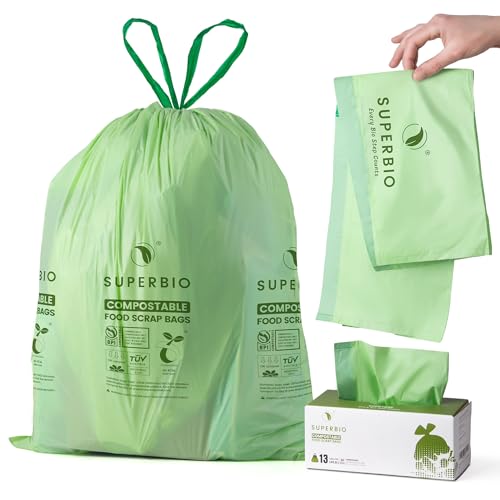
The SUPERBIO 13-gallon compostable waste bags fit standard kitchen trash cans and hold up to 49.2 liters. Each bag measures 25.2 by 25.6 inches and uses 1-mil material, with a drawstring closure for tying and carrying. The roll includes 30 bags, priced around $23, so each bag costs less than $1.
The key benefit is certified commercial compostability, not backyard composting. BPI and TÜV certifications support ASTM D6400 and EN 13432 standards, but local facilities may not accept these bags. The manufacturer recommends storing them in a cool, dry place and using them within their roughly one-year shelf life. Once filled with organic waste, especially acidic or alkaline scraps, dispose of the bag within three days. Packaging may vary because older and newer versions ship at random.
Pros
- 13-gallon capacity suits many standard kitchen cans.
- Drawstring tops make filled bags easier to close and carry.
- BPI and TÜV certifications support use in approved commercial composting programs.
Cons
- Commercial composting access varies by location, and these bags are not intended for home compost piles.
- A three-day disposal window for organic waste may be inconvenient for households with low kitchen waste.
4. ANECO Compostable Waste Bags

Best for: Small kitchen compost bins
ANECO’s 2.6-gallon bags are made for countertop food-scrap containers, small office bins, and vermicomposting setups. Each bag measures 16.5 by 16.3 inches, so it should fit many containers in this size range. The package now includes 110 bags, up from 100, for around $16. The material uses corn starch and other plant-based ingredients instead of conventional plastic.
What sets these liners apart is their composting certification. They meet ASTM D6400 requirements and carry OK Compost Home, BPI, and Seedling certifications for home or industrial composting. Under suitable conditions, the bags may break down into carbon dioxide, water, and organic matter within six to 12 months. The thicker construction is intended to resist rips and leaks from wet scraps. Still, capacity remains limited, and heavy food waste can challenge any small compost liner.
Pros
- Includes 110 bags, giving you 10 more liners at the listed price.
- Home-compostable design can suit backyard compost systems, not only industrial facilities.
- 16.5-by-16.3-inch dimensions fit many 2.6-gallon countertop containers.
Cons
- The 2.6-gallon capacity is too small for large households or frequent kitchen cleanup.
- Composting depends on suitable conditions, and many municipal programs may not accept these bags.
3. Matter Compostable Resealable Bags

Best for: Families replacing mixed plastic bag sizes
Matter’s 230-count variety pack includes 80 snack bags, 80 sandwich bags, 50 quart bags, and 20 gallon bags. Each bag has a resealable closure, and the organizer measures 11 by 10 by 3.1 inches for kitchen drawer storage. At around $29, the set covers several common food-storage needs in one purchase.
The bags use plant-based, renewable fibers instead of traditional plastic, foam, or paper. They contain no added PFAS and are gluten-free, BPA-free, and nut-free. BPI, TUV Home, and TUV Industrial certifications support composting through qualifying home, industrial, and organic-recycling programs. The bags are refrigerator- and freezer-safe, and the material can be reused until it is ready for composting. The manufacturer says they break down in months, but local composting rules still matter.
Pros
- Four bag sizes cover snacks, sandwiches, leftovers, and larger food portions.
- Plant-based material contains no added PFAS and is designed for composting.
- Freezer-safe, resealable bags can be reused before disposal.
Cons
- Only 20 gallon bags are included, so larger bags make up a small part of the pack.
- Composting access varies, and many local curbside programs may not accept these bags.
2. SUPERBIO 1.6 Gallon Compostable Food Scrap Bags

Best for: Small kitchen compost caddies
The SUPERBIO 1.6-gallon compost bags fit countertop food-scrap bins up to about 6 liters. Each roll contains 50 liners measuring 16.1 by 19.3 inches, with a 0.63-mil thickness. The bags use handle ties, so you can close the opening and carry scraps without touching the waste. A star-sealed bottom adds support around the base. The package includes bags only, not a countertop bin. At around $14, the roll costs less than many multi-pack options, but the value depends on how often you empty your caddy.
These liners carry BPI certification for commercial composting, plus OK compost HOME and TÜV SEEDLING certifications. They also meet ASTM D6400 and EN 13432 standards. That gives buyers clearer material guidance than a generic “biodegradable” label. Still, disposal rules vary by location. Some areas lack commercial composting services, and local programs may reject certified bags. Keep the roll in a cool, dry place away from heat. The manufacturer recommends using each filled bag within three days, especially with strongly acidic or alkaline scraps. Shelf life is about one year.
Pros
- Fifty bags provide a practical supply for regular countertop use.
- Handle ties and a reinforced star-sealed bottom help contain heavier food waste.
- Multiple compostability certifications support more informed disposal choices.
Cons
- Commercial composting access may be limited in your area.
- Bags should not hold organic waste beyond three days, and storage lasts about one year.
1. UNNI 2.6-Gallon Compostable Bags
Best for: Small kitchen compost bins
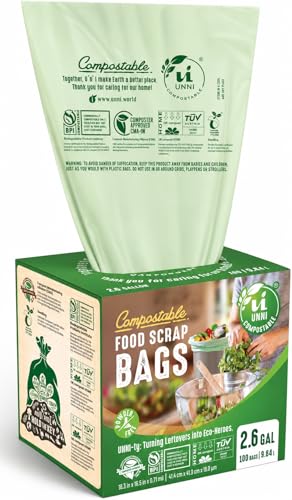
The UNNI 2.6-gallon compostable bags fit compact food-scrap containers and bathroom or office bins. Each liner measures 16.3 by 16.5 inches and holds about 9.84 liters, or 10 liters. The roll includes 100 bags, so it should cover several months of regular use. At 0.71 mil thick, the material is made for peels, coffee grounds, leftovers, and other everyday scraps.
The strongest point is its range of compostability certifications. BPI certification follows the U.S. ASTM D6400 standard, while CMA certification covers field testing at operating facilities. TÜV AUSTRIA also gives the bags an OK compost HOME certification for backyard composting. They use plant-based materials instead of conventional plastic. Store the roll somewhere cool and dry, then use the bags within nine months for the best performance. Around $14, the pack offers a low per-bag cost, though local composting access still matters.
Pros
- 100 bags per roll provide a long supply for small bins.
- 0.71-mil liners handle common kitchen scraps and peels.
- Certified for commercial and home composting under listed standards.
Cons
- The 2.6-gallon capacity may not fit larger kitchen containers.
- Commercial composting programs are not available in every area.
Buying Guide
Certification and disposal compatibility matter most. A bag labeled “compostable” may require a commercial facility, while home-compostable products break down under backyard conditions.
- Certification: Look for BPI or ASTM D6400 approval for commercial composting, or an explicit home-compost certification such as TÜV Austria OK compost HOME. Avoid vague claims without a recognized standard.
- Correct size: Match the liner to your bin. A 2.6-gallon caddy usually needs an 18-by-16-inch bag, while a 13-gallon kitchen bin often needs about 24-by-28 inches.
- Leak resistance: Choose bags at least 0.85 mil thick for wet food scraps, and add a paper towel or cardboard layer for liquids. No compostable liner is fully leak-proof.
- Closure and fit: Drawstring or tie-handle tops make full bags easier to carry. Leave 3 to 4 inches of overhang so the liner stays inside the rim.
- Pack value: Compare usable bags, not package size. A 30- to 100-count pack often costs $8 to $25, though thicker liners can cost more per bag.
If you can compromise on one feature, prioritize verified certification that matches your local composting route.
Frequently Asked Questions
How do compostable bags work?
Compostable bags break down into carbon dioxide, water, and biomass under specified composting conditions, unlike ordinary plastic bags. Many require commercial composting facilities instead of backyard piles. Look for recognized labels such as ASTM D6400 or EN 13432, and remember that these liners may not fully decompose in a landfill.
What are the best compostable bags for kitchen scraps?
The best compostable bags for kitchen scraps are certified liners that fit your bin, resist leaks, and match your local collection rules. A 3-gallon bag suits many countertop pails, while larger 6- to 13-gallon liners fit household bins. Avoid bags with vague “green” claims but no compostability certification.
Can compostable bags go in food waste bins?
Compostable bags can go in a food-waste bin only when the local collection program accepts certified liners. Some services allow them, while others require loose scraps or paper bags. Check the program’s rules before buying, since accepted materials can vary between neighboring towns and change with facility requirements.
Are compostable trash bags stronger than plastic ones?
Compostable trash bags are usually less resistant to punctures, stretching, and moisture than conventional plastic liners. They work best for light food scraps and dry waste, not sharp cans or heavy liquids. Choose a close-fitting liner for your bin, and avoid overfilling it or storing wet waste for several days.
Conclusion
UNNI 2.6-Gallon Compostable Bags are the top pick for shoppers who need small liners for kitchen caddies, bathroom bins, or countertop food-scrap containers. If your priority is carrying heavier loads or fitting a larger pail, choose a larger compostable liner with a thicker build instead. Before buying, double-check the bag dimensions, your bin’s compatibility requirements, pack quantity, and current price, since listings can change. Compostable does not always mean suitable for every disposal program. Many bags need a commercial composting facility, and some facilities accept only certified products. Check the certification label and your local collection rules. A snug fit helps prevent leaks, split seams, and wasted bags during daily use. Choose the pack that matches your routine.