
7 Best Water Filter for Limescale for Hard Water Homes
The ZeroWater 10-Cup Water Filter Pitcher is the best water filter for limescale for most buyers. Its five-stage filter targets dissolved minerals, including calcium and magnesium that contribute to chalky deposits, while the included TDS meter shows when dissolved-solids levels rise. It holds enough water for a small household without taking up the space of an under-sink system. The main tradeoff is filter life. Hard water can use cartridges quickly, and replacements cost more than basic carbon filters.
This guide is for renters, families, and anyone dealing with cloudy kettles, spotted glassware, or mineral buildup. For these pitchers and countertop systems, reduction performance and replacement cartridge cost matter most. Capacity also affects how often you refill the unit each day. The 7 picks below are ranked with clear reasons and honest drawbacks for each, so you can choose a practical match for your water and budget.
Quick Comparison
| # | Product | Best For | Price | |
|---|---|---|---|---|
| 1 | ZeroWater 10-Cup Water Filter Pitcher | TDS-conscious drinking water users | $28.99 | View → |
| 2 | ZeroWater Water Filter Dispenser | High-volume household hydration | $33.74 | View → |
| 3 | Brita Metro 6-Cup Water Filter Pitcher | Small refrigerator shelf owners | $27.49 | View → |
| 4 | DREO Countertop Reverse Osmosis Water Filter | Countertop reverse osmosis seekers | $152.99 | View → |
| 5 | Culligan ZeroWater Ready-Read Water Filter Dispenser | TDS-monitoring family kitchens | $44.99 | View → |
| 6 | Waterdrop PT-05P Water Filter Pitcher | Budget-friendly filtered water shoppers | $16.99 | View → |
| 7 | BRITA Marella Water Filter Jug | European-style kitchen users | $45.96 | View → |
7 Top Limescale Filter Picks
The list is ranked by filtration performance, setup, maintenance, and value, counting down to the top pick.
7. BRITA Marella Water Filter Jug

Best for: Chilled tap water in busy kitchens
The BRITA Marella is a 2.4L plastic filter jug for households that want better-tasting tap water without installing a faucet filter. Its flap allows one-handed filling, and its shape fits standard refrigerator doors. The jug uses food-safe plastic that contains no BPA and is dishwasher safe, although the lid must be washed separately.
Three MAXTRA PRO All-in-1 cartridges come in the box. Each filter lasts about four weeks, while the electronic Memo tracks time and prompts replacement. The cartridge reduces chlorine, limescale, lead, copper, herbicides, pesticides, and particles 30 micrometres or larger. BRITA also states that it reduces PFAS, including PFOS and PFOA, by at least 80% under JWPAS B.210 and NSF/ANSI 53 testing. It also works with MAXTRA+ filters, but regular refills and cartridge purchases remain part of ownership.
Pros
- One-handed filling makes topping up the jug easier.
- Three included filters provide roughly 12 weeks of initial use.
- Filtration targets chlorine, limescale, metals, and specified PFAS.
Cons
- The 2.4L capacity may require frequent refilling in larger households.
- The lid cannot go in the dishwasher, so it needs separate hand washing.
6. Waterdrop PT-05P Water Filter Pitcher

Best for: Small kitchens and dorm refrigerators
The Waterdrop PT-05P is a 7-cup filtered water pitcher with a compact pink body. It measures 9.7 by 3.8 by 10 inches, so its narrow profile should fit many refrigerator doors or shelves. Still, check your available space before ordering. The pitcher costs around $17, keeping it below many larger countertop filtration systems.
Its multi-stage filter uses activated carbon fiber and carries NSF/ANSI 42 and 372 certifications. Waterdrop says third-party testing found reductions in chlorine, PFOA/PFOS, odor, iron, and metal ions. Chlorine reduction reaches up to 97.4%, which may improve tap water taste. The lid dispenses water without requiring removal, and a built-in indicator shows filter status. Replacement filters are sold separately under the PF-01A name, or Amazon listing B086ZPR3WM. This model does not reduce TDS, so it is not intended for shoppers seeking low-TDS water.
Pros
- Compact size: The 3.8-inch width suits many crowded refrigerator shelves.
- Certified filtration: NSF/ANSI 42 and 372 certifications support its material and chlorine-reduction claims.
- Simple filter tracking: The built-in indicator shows when the filter needs replacement.
Cons
- No TDS reduction: It will not lower total dissolved solids in your water.
- Small capacity: Seven cups may require frequent refills for families or shared offices.
5. Culligan ZeroWater Ready-Read Water Filter Dispenser

Best for: Families reducing bottled water waste
This 22-cup countertop dispenser uses a five-stage filter with ion-exchange technology. It is designed to remove virtually all total dissolved solids, including minerals, salts, metals, and other dissolved particles. A built-in TDS meter gives a quick reading before you pour. Culligan recommends replacing the filter when the display reaches 006. At around $45, it offers a larger capacity than a standard pitcher without requiring a plumbing connection.
The filter is IAPMO certified to reduce lead, chromium, mercury, and PFOA/PFOS. The dispenser and filter materials are BPA free. One filter comes in the box, along with the digital meter, so there are no extra setup parts to buy. Culligan estimates that each filter can replace up to 110 single-use plastic bottles, or as many as 660 bottles per year. Actual savings depend on household water use and filter life. The clear readout is useful, but the TDS number only measures dissolved solids. It does not identify each contaminant or confirm overall water safety.
Pros
- 22-cup capacity reduces frequent refills for families.
- Five-stage filtration targets TDS, lead, chromium, mercury, and PFOA/PFOS.
- Built-in meter provides a clear replacement point at 006.
Cons
- The TDS meter cannot tell you which contaminants are present.
- A full 22-cup dispenser takes up more counter space than a smaller pitcher.
4. DREO Countertop Reverse Osmosis Water Filter
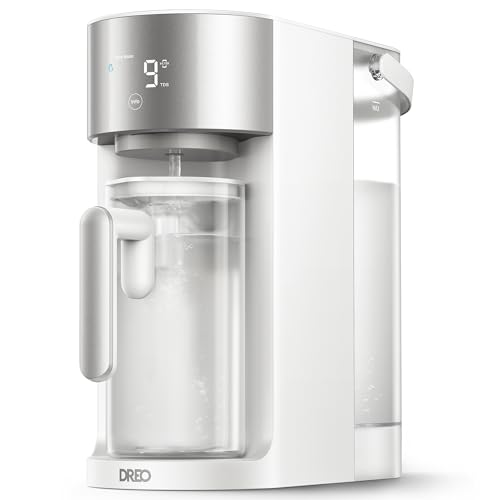
Best for: Apartment kitchens serving one or two
The DREO is a countertop reverse-osmosis purifier for homes that want filtered water without plumbing work. It uses a 7-in-1 system and claims to remove 99.9% of possible contaminants, including PFOA, PFOS, chlorine, and fluoride. The listing says SGS testing found it met NSF/ANSI 58 standards. A 3-liter water tank and 1.1-liter pitcher suit daily use for one or two people.
Its 14.51-by-6.73-by-13.35-inch footprint fits beside many sinks, though you still need room above it for filling. The pitcher can refill through an auto-fill sensor, while the self-cleaning cycle flushes the internal tubes. A screen shows raw and purified water TDS levels, plus filter life. The filter handles up to 265 gallons, or 1,000 liters, and uses a twist-in replacement design. Its 3:1 pure-to-drain ratio wastes less water than many basic RO systems, but it still sends some water down the drain. At around $153, it costs more upfront than simple faucet filters.
Pros
- Installation-free design avoids drilling or connecting plumbing.
- Live TDS readings and filter reminders simplify maintenance.
- A 3:1 pure-to-drain ratio reduces water waste.
Cons
- The 6.73-inch width and 13.35-inch height may crowd small counters.
- A 3-liter reservoir and 1.1-liter pitcher require frequent refills for larger households.
3. Brita Metro 6-Cup Water Filter Pitcher

Best for: Small households wanting filtered tap water
The Brita Metro is a compact 6-cup pitcher for refrigerators, desks, or small kitchens. It includes one BritaPlus high-density filter, which is designed to trap twice as many contaminants as the brand’s standard filter, including chlorine, mercury, cadmium, copper, and zinc. The black design keeps the footprint modest, though the small reservoir limits how much water you can prepare at once.
Its filter is rated for about 40 gallons, or roughly two months for a household drinking 11 glasses daily. The system also helps retain minerals and electrolytes, although those minerals may not be present in every water supply. Brita estimates that switching can save about $240 per year and replace up to 300 single-use bottles per filter. Those numbers depend on your water use and local bottled-water prices. The filter works with Brita systems except Stream models.
Pros
- The 6-cup size fits smaller refrigerators and households.
- BritaPlus targets chlorine, mercury, cadmium, copper, and zinc.
- One filter can replace up to 300 plastic bottles.
Cons
- Six cups may not cover a family’s daily needs without frequent refills.
- Filters need replacement about every two months, based on 40 gallons of use.
2. ZeroWater Water Filter Dispenser
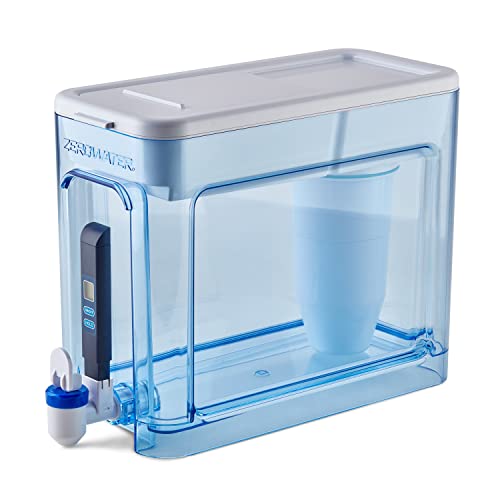
Best for: Families wanting lower-TDS drinking water
The ZeroWater 32-Cup Ready-Read dispenser uses a five-stage filter with ion exchange technology. It targets dissolved solids, including metals, minerals, salts, and other ions. The package includes one filter and a free TDS meter, so you can check water readings before pouring. ZeroWater recommends changing the filter when the meter reaches 006.
Its IAPMO certification covers reductions in PFOA/PFOS, lead, chromium, and mercury, while the dispenser and filter materials are BPA free. The 32-cup reservoir suits shared kitchens, offices, and households that refill glasses often. At around $34, it costs more than a basic pitcher but offers much greater capacity. The brand also estimates that one filter can replace up to 110 single-use bottles, or as many as 660 bottles per year. Actual savings depend on local water quality and how often the filter needs changing.
Pros
- Large 32-cup capacity reduces frequent refills for families or offices.
- Included TDS meter shows when the filter reading reaches 006.
- IAPMO-certified reduction claims cover PFOA/PFOS, lead, chromium, and mercury.
Cons
- A 32-cup container needs considerable refrigerator or counter space.
- The TDS meter measures dissolved solids, not every possible contaminant or water-quality concern.
1. ZeroWater 10-Cup Water Filter Pitcher
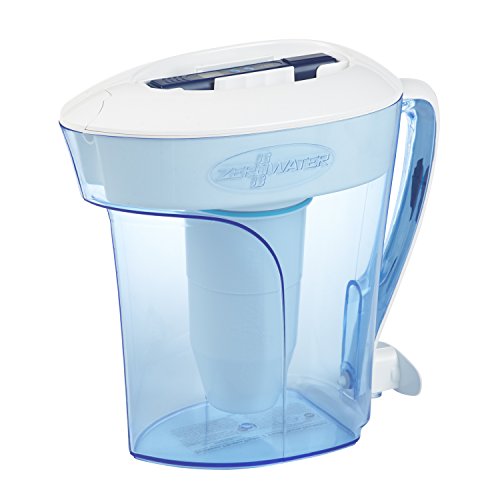
Best for: Households wanting very low-TDS water
This ZeroWater pitcher holds 10 cups and uses a five-stage ion exchange filter. The system targets dissolved solids, including metals, minerals, salts, and other ions, rather than only reducing chlorine taste. A built-in TDS meter shows the water’s dissolved-solids level before you pour, giving you a clearer signal for filter replacement. At around $29, it costs more than a basic carbon pitcher but includes the meter and filter.
The filter is IAPMO certified to reduce PFOA/PFOS, lead, chromium, and mercury. The pitcher uses BPA-free plastic and includes one compatible ZeroWater or Culligan ZeroWater filter. ZeroWater says each filter can replace up to 110 single-use bottles, or as many as 660 bottles per year, though actual filter life depends on your tap water. The ready-pour design suits refrigerators and shared kitchens, but five-stage filtration can take longer than a standard pour-through filter.
Pros
- TDS meter provides a direct reading of dissolved-solids levels.
- Five-stage filtration reduces PFOA/PFOS, lead, chromium, mercury, and other dissolved solids.
- Ten-cup capacity can reduce trips to the sink for families or small offices.
Cons
- The filter removes minerals along with unwanted dissolved solids, which may make the water taste flat to some people.
- Replacement filters are required, and hard or heavily mineralized tap water may shorten their useful life.
Buying Guide
The most important factor is the filter’s suitability for your water hardness. A cartridge designed for moderately hard water may exhaust quickly in very hard areas, leaving kettles and taps covered in scale.
- Hardness rating: Check your supply report for grains per gallon or milligrams per litre. Choose a system rated for your level, such as 120 to 180 mg/L for moderately hard water.
- Treatment method: Ion-exchange cartridges usually reduce calcium and magnesium directly. Polyphosphate systems help limit deposits, while reverse-osmosis units remove more dissolved minerals but waste some water.
- Capacity and replacement: Compare cartridge life in litres, not vague time estimates. A 2,000-litre cartridge may last six months in a two-person home, but much less with heavy use.
- Flow rate: Pick at least 1.5 litres per minute for a drinking-water tap. Whole-house systems need a higher rating, often 10 to 15 litres per minute, to avoid weak showers.
- Installation and running cost: Countertop and jug filters need little setup. Under-sink units may need drilling and a separate tap. Budget around £30 to £100 yearly for replacement cartridges, depending on capacity.
If you cannot have everything, prioritize a hardness rating matched to your water, since an unsuitable system will not control scale for long.
Frequently Asked Questions
How do I choose a water filter for limescale?
Choose an ion-exchange water softener if your goal is to remove the calcium and magnesium that form limescale. Check its rated capacity, installation method, and replacement salt or cartridge costs before buying. A carbon-only filter can improve taste, but it does not reliably reduce hard-water minerals.
What type of filter removes the most limescale from tap water?
Reverse-osmosis systems remove the most dissolved minerals from tap water, while ion-exchange softeners work better for treating an entire home. An RO unit usually produces filtered drinking water at one faucet and sends some water to waste. Look for a stated calcium or hardness reduction figure.
Can a jug filter stop limescale in kettles?
No, a jug filter usually cannot stop limescale completely, but an ion-exchange cartridge can reduce deposits in a kettle. Performance depends on the incoming water and cartridge condition. Many cartridges need replacement after roughly 100 to 150 litres, so check the maker’s capacity rather than relying on taste.
Are whole-house limescale filters worth buying?
Whole-house filters are worth buying when hard water affects showers, boilers, and several taps, but they cost more than a point-of-use unit. Compare flow rate, installation space, and ongoing cartridge or salt costs. For example, a drinking-water RO system may treat one faucet, while a softener treats the incoming supply.
Conclusion
ZeroWater 10-Cup Water Filter Pitcher is the strongest fit for renters and households that want a countertop option for reducing dissolved minerals without installing equipment. If your priority is protecting pipes, showers, and appliances throughout the home, choose a properly sized ion-exchange water softener instead, since a pitcher only treats the water you pour through it. Before buying, double-check the 10-cup size, replacement-filter compatibility, the number of filters in the package, and the current price of both the pitcher and refills. Budget for replacement cartridges, too, since frequent refills can raise the long-term cost. This pitcher fits drinking and cooking water, not whole-home scale control or appliance protection.