
6 Best Bagged Compost for Vegetable Garden on a Budget
R&M Organics Compost Soil Amendment Fertilizer is the top pick for most buyers seeking the best bagged compost for vegetable garden because its combined soil-amendment and fertilizer role offers one product for improving soil and feeding plants. It fits gardeners who want a practical, general-purpose option rather than a specialized blend for one crop. Check the ingredient list before buying, since compost quality depends on the source materials and processing.
This guide is for vegetable growers comparing soil additions for raised beds, containers, and in-ground rows. The key factors are bag volume, listed materials, and whether the compost looks mature rather than woody or overly wet. Those details affect coverage and how safely the product mixes into planting soil. The 6 picks below are ranked with clear reasons and honest drawbacks for each, helping you match a product to your garden size and planting plans.
Quick Comparison
| # | Product | Best For | Price | |
|---|---|---|---|---|
| 1 | R&M Organics Compost Soil Amendment Fertilizer | Small Garden Soil Improvements | $24.49 | View → |
| 2 | Michigan Peat Garden Magic Compost Blend | Raised Bed Soil Blending | $29.99 | View → |
| 3 | Brut Cow Compost Organic Soil Amendment | Livestock-Based Compost Preferences | $24.99 | View → |
| 4 | Charlie's Vegan Compost | Plant-Based Gardening Households | $26.99 | View → |
| 5 | Espoma Organic Land and Sea Compost (2-Pack) | Bulk Compost Garden Projects | $47.79 | View → |
| 6 | Old Potters Organic Compost Potting Soil | Container Gardening With Added Compost | $39.99 | View → |
6 Bagged Compost Picks for Vegetable Gardens
Here are six bagged compost options, ranked from sixth place down to the top pick for vegetable gardens.
6. Old Potters Organic Compost Potting Soil

Best for: Organic indoor and outdoor gardeners
Old Potters Organic Compost is a plant-based soil amendment for home gardens, containers, and outdoor growing beds. The package contains about 25 pounds, or 24 quarts, giving you enough material for several pots or a small garden area. Its organic, chemical-free formula uses recycled plant matter instead of synthetic fertilizer ingredients. At around $40, it costs more than many basic soil bags, so it makes the most sense for buyers who prioritize natural materials.
The main benefit is its focus on everyday soil health. Compost can help loosen dense soil, improve airflow around roots, and hold moisture between waterings. It also adds organic nutrients that support steady plant growth. This mix suits indoor and outdoor use, which makes it practical if you care for houseplants, raised beds, herbs, or flowers. Still, the listing does not provide a guaranteed nutrient analysis, pH range, or recommended application rate. Those details matter for plants with specific soil needs. You may need a separate potting mix or fertilizer for specialized growing projects.
Pros
- Plant-based and chemical-free for natural gardening.
- Helps improve aeration, moisture retention, and nutrient access.
- A 24-quart bag works for indoor pots and outdoor beds.
Cons
- A 25-pound bag can be bulky to lift and store.
- No listed pH, nutrient breakdown, or application measurements.
5. Espoma Organic Land and Sea Compost (2-Pack)

Best for: Gardeners amending beds and containers
Espoma Organic Land and Sea Compost comes as two 1-cubic-foot bags, or 2 cubic feet total. It is made for planting and transplanting vegetables, flowers, trees, and shrubs. The mix combines natural and organic materials with lobster and crab meal. Use it to improve native garden soil, or blend it into planters and window boxes. At around $48 per two-bag pack, it costs about $24 per cubic foot.
The main difference is its added Myco-Tone blend, which contains both endomycorrhizae and ectomycorrhizae. These fungi are included to support the root zone, though the product does not promise a specific growth period or harvest increase. You can use this amendment any time you plant or move plants. It contains no synthetic plant foods or chemical additives, which suits organic gardening plans. Since it is a planting mix rather than a complete fertilizer program, gardeners may still need other soil amendments based on their plants and existing soil.
Pros
- Two 1-cubic-foot bags provide 2 cubic feet for beds or containers.
- Lobster and crab meal adds organic ingredients to the planting mix.
- The endo and ecto mycorrhizae blend supports varied root environments.
Cons
- The two-bag pack is bulky for small gardens or occasional planting.
- It may not replace a complete potting mix or fertilizer plan.
4. Charlie’s Vegan Compost

Best for: Vegan gardeners growing indoors
Charlie’s Vegan Compost is a dry, 10-pound soil amendment for indoor pots, raised beds, vegetable gardens, and home compost bins. It contains no animal products or by-products. The blend uses hay, cover crops, residue from organic crops and land, composted forest products, and clay dirt from the maker’s organic farm. Mix it into existing soil rather than treating it as a complete potting mix. Its concentrated format also makes the bag easier to store than bulky, wet compost.
The main draw is its plant-based ingredient list and reported lack of odor. That combination may suit apartment gardeners who want to feed plants without bringing a strong compost smell indoors. Gardeners can also add it to a household compost pile to help supply organic material as kitchen and yard waste breaks down. At around $27, the bag costs more than some basic compost options, but the vegan formula gives it a clear purpose for buyers avoiding manure-based products. Results will depend on the existing soil, crop, and application rate.
Pros
- Uses hay, cover crops, crop residue, forest products, and clay instead of animal inputs.
- A 10-pound dry bag fits indoor storage and smaller garden spaces.
- Reported odor-free formula works well for indoor containers and home composters.
Cons
- It is a soil amendment, not a standalone potting mix, so plants need other growing materials.
- No nutrient analysis or N-P-K ratio is provided, making precise feeding harder.
3. Brut Cow Compost Organic Soil Amendment

Best for: Small gardens and potted plants
Brut Cow Compost is a 10-quart bag of composted cow manure for indoor and outdoor soil. It contains no added fertilizers or fillers, and the manufacturer says it is carefully aerated, safety tested, and finely sifted. The material supplies nitrogen, calcium, and iron while adding organic matter that can support soil microbes. Use it in vegetable beds, flower borders, lawns, shrubs, containers, or houseplant soil. At around $25, it costs more than many basic soil amendments, but the additive-free formula may appeal to organic gardeners.
The main advantage is its broad use. You can mix it into garden soil, spread it as a top dressing, or blend a small amount into potting soil. The compost is described as odor-free and gentle on roots, so it should be less troublesome around seedlings and indoor plants than fresh manure. Brut also lists the product with OMRI, which gives organic growers a useful certification to check. Still, composted manure is a soil amendment, not a complete replacement for every plant’s fertilizer needs.
Pros
- 10 quarts suit containers, raised beds, flowers, and small vegetable gardens.
- Additive-free compost provides organic matter plus nitrogen, calcium, and iron.
- OMRI-listed formula works for gardeners following organic growing practices.
Cons
- A 10-quart bag may cover only a small section of a large lawn or garden.
- It does not provide a full, tailored nutrient program for demanding plants.
2. Michigan Peat Garden Magic Compost Blend
Best for: Small raised beds and planters
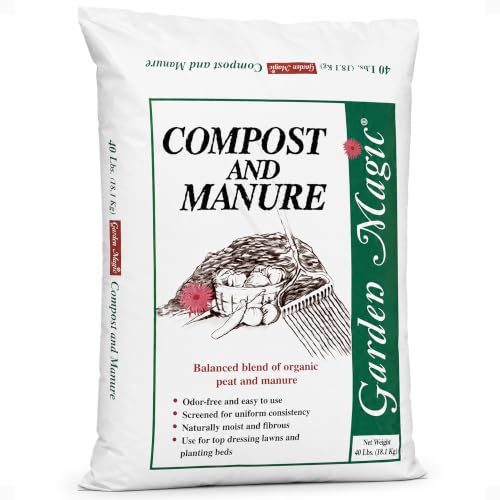
Michigan Peat Garden Magic is a ready-to-use soil amendment made from odor-free reed sedge peat and composted animal manure. The blend adds organic matter and nutrients to tired lawn soil, raised beds, planters, and container mixes. It supports flowers, vegetables, and grass without requiring extra composting time. At around $30 per bag, it fits smaller gardening projects better than large landscaping jobs.
Each 40-pound bag contains about 0.75 cubic feet of material. That amount can refresh several planters or improve a compact raised bed, but larger gardens will need multiple bags. The odor-free formula is a practical choice for gardeners working near patios, porches, or indoor storage areas. Its main strength is convenience, since the compost and peat arrive blended and ready for immediate use. It is an amendment, not a complete potting mix, so container gardeners may need to combine it with other soil ingredients.
Pros
- Ready-to-use peat and compost blend saves preparation time.
- Composted manure and organic matter add nutrients to garden soil.
- Odor-free formula works well near homes, patios, and porches.
Cons
- A 40-pound bag covers only about 0.75 cubic feet.
- It may cost more than bulk compost for large beds or lawn projects.
1. R&M Organics Compost Soil Amendment Fertilizer

Best for: Small gardens and container plants
R&M Organics is a 10-pound bag of fully composted dairy cow manure used to improve garden soil. Mix it into beds, raised beds, pots, or landscaping areas, or spread it around established plants. It suits vegetables, herbs, flowers, fruit trees, lawns, and indoor containers. At around $24, the bag fits small to medium gardening projects better than large yard renovations.
Continuous aeration during composting helps reduce strong manure odors and unwanted impurities. The finished material has a cleaner, earthy scent that works indoors or outside. Apply a thin layer of about one-quarter inch around plants, or mix it into soil before planting. The compost can improve texture, aeration, and moisture retention, which may help soil stay hydrated between waterings. Its broad use is convenient, but the product does not provide a listed nutrient analysis for precise feeding plans.
Pros
- Fully composted dairy manure adds organic material to depleted soil.
- Works in garden beds, pots, lawns, raised beds, and landscapes.
- Low-odor, earthy-smelling material is more practical for indoor use.
Cons
- A 10-pound bag may not cover large lawns or multiple garden beds.
- No listed nutrient analysis makes it harder to match application rates to specific plant needs.
Buying Guide
The most important factor is compost maturity. Fully finished material supplies organic matter without robbing nitrogen, overheating roots, or carrying weed seeds into the vegetable bed.
- Ingredient list: Choose compost made mainly from plant matter, manure, or both. Avoid bags listing untreated wood, sewage sludge, or “green waste” without further detail.
- Maturity and smell: Select dark, crumbly material with an earthy smell. Reject bags that feel hot inside or smell sour, ammonia-like, or rotten.
- Screened texture: Look for pieces under ½ inch for raised beds and seedling mixes. A few twigs are acceptable, but large chunks can leave empty pockets around roots.
- Salt and pH information: For vegetables, target a pH near 6.0 to 7.5. If the label lists electrical conductivity, stay below 4 dS/m, and choose lower-salt compost for seedlings.
- Bag volume and coverage: Compare litres, not just bag count. One 40-litre bag covers about 4 square feet at a 3-inch depth, so calculate the needed volume before buying.
- Safety and testing: Prefer products with pathogen-control details and a recent quality test. Organic growers should look for an OMRI listing when certification matters.
If you cannot satisfy every requirement, prioritize fully mature compost with a clear ingredient list and clean, earthy odor.
Frequently Asked Questions
How do I choose bagged compost for a vegetable garden?
Choose a bagged compost labeled for vegetables, with mature organic matter, a clean ingredient list, and no fresh manure as the main component. A pH near 6 to 7 suits many crops. Look for screened material without strong ammonia or sewage odors, which can signal immature or poorly processed compost.
What ingredients should a good compost blend contain?
Look for compost made from plant matter, manure, or blended organic materials, with the source clearly listed. A balanced product often contains several feedstocks rather than one dominant material. Avoid bags with visible plastic, wood chunks over 1 inch, or a strong chemical or ammonia smell, since these suggest poor screening or incomplete processing.
Can I use bagged compost directly in a vegetable garden?
Yes, you can use bagged compost directly in a vegetable garden, but mix it with existing soil rather than filling beds with compost alone. For new beds, blend about one part compost with two parts soil. For established beds, spread a 1-inch layer around plants and keep it off stems.
Are all bagged composts safe for growing vegetables?
No, not all bagged composts are equally suitable for vegetables, so choose products with clear ingredients and a stated intended use. Check for composted manure warnings and avoid unknown sources. If a label mentions persistent herbicides, biosolids, or untreated waste, select another product. Certified organic options can offer clearer input rules.
Conclusion
R&M Organics Compost Soil Amendment Fertilizer is the top pick for vegetable gardeners who want one bag to improve soil structure while adding compost-based nutrients to raised beds, containers, and planting rows. If your priority is faster feeding rather than a gentle soil amendment, choose a compost blend with aged manure or an organic fertilizer, since it can provide more available nutrients during the growing season. Before buying, double-check the bag size, ingredient list, and crop compatibility, then estimate how many bags your beds need based on their length, width, and application depth. Compare the current price per bag and per cubic foot, since a lower shelf price may not provide the best value.