
7 Best Compost Thermometer Picks for Fast Reads
The Reotemp 20-Inch Compost Thermometer is the best compost thermometer for most buyers because its long probe reaches the hot center of a pile without requiring you to turn the material first. Its purpose-built design gives gardeners a clearer read on active decomposition than a short kitchen thermometer. The 20-inch stem also suits deep bins, large outdoor piles, and layered compost that can develop uneven temperatures.
This guide is for home gardeners, new composters, and anyone troubleshooting a slow or smelly pile. Probe length and dial readability matter most here. A stem should reach the core, while a clear temperature face makes it easier to spot a pile that needs more moisture, air, or carbon-rich material. The seven picks below are ranked by practical use, with reasons to consider each one and honest drawbacks for every model.
Quick Comparison
| # | Product | Best For | Price | |
|---|---|---|---|---|
| 1 | Reotemp 20-Inch Compost Thermometer | Large-Bin Compost Monitoring | $22.99 | View → |
| 2 | 20-Inch Compost Thermometer, Stainless Steel Soil Temperature Gauge | Stainless Steel Gardeners | $19.95 | View → |
| 3 | Greenco Compost Soil Thermometer | Small Backyard Composters | $22.99 | View → |
| 4 | Reotemp Backyard Pro Compost Thermometer | Serious Home Compost Managers | $59.99 | View → |
| 5 | Reotemp 16-Inch Compost Thermometer | Compact Compost Bin Owners | $15.99 | View → |
| 6 | VIVOSUN Compost Thermometer | Budget-Conscious Gardeners | $24.99 | View → |
| 7 | Tellegloww Compost Thermometer | Beginner Compost Temperature Tracking | $45.99 | View → |
7 Compost Thermometers Worth Considering
This ranked list counts down from number seven to our top pick, with key features and drawbacks for each model.
7. Tellegloww Compost Thermometer

Best for: Monitoring deep, active compost piles
The Tellegloww Compost Thermometer is a long-probe tool for checking heat inside compost instead of only measuring the surface. Its stainless steel stem reaches about 39.4 inches, giving it enough length for large or densely packed piles. The probe measures from 0°F to 220°F, or -10°C to 100°C, across a wide range suited to most composting conditions. A reading takes about 30 seconds.
What sets this model apart is its combination of reach and simple analog design. The 2-inch dial should be easier to read than a tiny gauge, while the sealed glass face helps block moisture and fog. The stainless steel stem measures about 0.16 inch thick, and reinforced welded bolts support the dial assembly. The thermometer is listed as waterproof, so it can remain in a pile overnight. At around $46, it costs more than basic soil thermometers, but the extra length targets a specific composting need.
Pros
- The 39.4-inch probe reaches deep into tall or compact compost piles.
- The 2-inch dial displays temperatures from 0°F to 220°F.
- A sealed glass face helps protect the reading from moisture and fog.
Cons
- The long stainless steel stem may be awkward to transport and store.
- Its analog dial takes about 30 seconds to settle, so it is slower than an instant digital reading.
6. VIVOSUN Compost Thermometer

Best for: Home composters tracking pile heat
This VIVOSUN compost thermometer uses a long stainless steel probe to check heat inside compost bins, garden soil, and planting beds. Its 20-inch total length includes a 19.7-inch stem made from 304 stainless steel. The 5 mm shaft can reach deeper material than a short soil gauge, while the 1.9-inch dial remains easy to view from above.
The analog scale covers 0 to 200°F and claims accuracy within ±2°F. Three colored zones mark steady, active, and hot compost conditions, so new composters can judge progress without interpreting a digital screen. The sealed, PC-coated lens has an IP55 rating to help resist moisture and fogging. For a reading, place the probe near the pile’s center, insert it about 6 cm, and wait three to five minutes. At under $25, it offers a simple way to monitor pile temperature, but it does not record changes over time or send alerts.
Pros
- The 19.7-inch stainless steel stem reaches into the center of larger compost piles.
- Three color-coded zones make temperature changes easier to interpret at a glance.
- A 0–200°F range covers cool, active, and hot compost conditions.
Cons
- The analog dial requires a three-to-five-minute wait for each reading.
- IP55 protection helps against moisture but does not make the thermometer suitable for submersion.
5. Reotemp 16-Inch Compost Thermometer
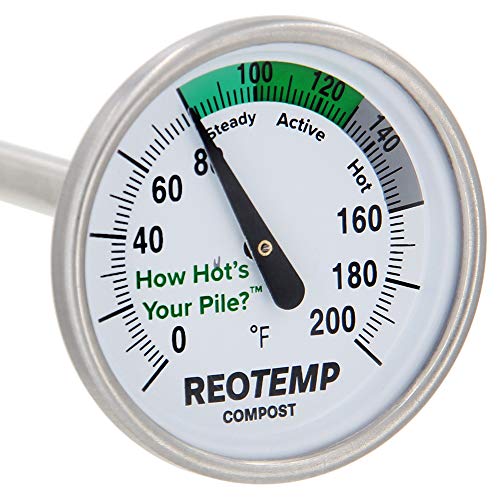
Best for: First-time backyard composters
The Reotemp 16-inch compost thermometer gives backyard gardeners a simple way to check pile temperature. Its 1/4-inch stainless steel stem reaches into the center of many outdoor compost piles, where heat levels tell you how active the material is. The Fahrenheit dial uses three zones, so you can quickly see whether the pile needs more air, moisture, or fresh materials. At around $18, it costs less than many digital garden thermometers.
Several details make this model practical for new composters. The hermetically sealed body helps prevent fogging inside the dial, while the stainless steel construction should handle regular outdoor use better than a basic plastic tool. A digital composting guide is included with instructions for building and managing a pile. The package also avoids plastic and Styrofoam. Its soy-ink box can be shredded and added to a compost pile as brown material, provided it stays clean and dry.
Pros
- The 16-inch stem reaches deeper into larger backyard piles.
- Three temperature zones make compost activity easy to read.
- The included digital guide helps new composters manage heat and moisture.
Cons
- The Fahrenheit-only scale may not suit gardeners who use Celsius.
- Its analog dial does not provide the exact numeric readings found on digital thermometers.
4. Reotemp Backyard Pro Compost Thermometer

Best for: Monitoring large backyard compost piles
The Reotemp Backyard Pro is a long-stem thermometer for checking heat inside an active compost pile. The model is listed at 36 inches, with a 24-inch probe stem that reaches below the surface. Its 5/16-inch diameter shaft uses stainless steel throughout, giving it a sturdier design than thin garden thermometers. At around $60, it costs more than basic compost thermometers, but the metal construction may appeal to gardeners who want a reusable tool.
What sets this thermometer apart is its simple activity guide. The 2.5-inch Fahrenheit dial uses three zones, Steady, Active, and Hot, so you can judge pile progress without decoding a long temperature chart. Its hermetically sealed face is designed to resist fogging when warm compost meets cool outdoor air. The included digital composting guide adds instructions for starting and managing a pile, including ways to support faster decomposition. Still, this is a dial thermometer, not a digital readout, so readings may be less exact than some buyers expect.
Pros
- The 24-inch stem reaches deep into larger compost piles.
- Stainless steel construction and a 5/16-inch shaft suit repeated outdoor use.
- Three Fahrenheit zones make activity checks quick.
Cons
- The analog dial may not provide the precise number some composters want.
- A 24-inch probe can be cumbersome for small bins or shallow composters.
3. Greenco Compost Soil Thermometer

Best for: Home composters tracking pile heat
This Greenco compost thermometer uses a 20-inch stainless steel stem to reach into larger bins and garden piles. The stem measures 0.2 inches wide, or 5 mm, and connects to the dial with a reinforced welded bolt. Its 304 stainless steel construction should handle regular contact with damp compost better than many basic garden thermometers. The included instructions explain how to read temperatures and manage a compost pile.
The 2-inch dial displays Fahrenheit from 40 to 180 degrees and Celsius from -17.77 to 82.22 degrees. Color-coded zones make the dial easier to scan, while markings appear in 2-degree increments. A lightweight PC-coated lens covers the display, and the sealed housing carries an IP55 water-resistance rating. That protects against limited water exposure, but it does not make the thermometer waterproof. At around $23, it offers useful reach and dual-scale readings without a complicated digital screen.
Pros
- The 20-inch stem reaches deep compost piles and larger bins.
- Dual Fahrenheit and Celsius scales support flexible temperature checks.
- Sealed, PC-coated lens helps reduce moisture and fogging inside the dial.
Cons
- The 2-inch dial may be hard to read from several feet away.
- IP55 protection does not cover submersion or heavy water exposure.
2. 20-Inch Compost Thermometer, Stainless Steel Soil Temperature Gauge
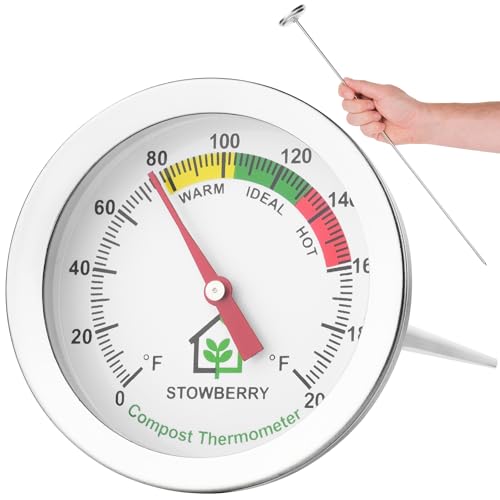
Best for: Monitoring large backyard compost piles
This compost thermometer uses a 20-inch stainless steel probe to reach the center of deep bins, tumblers, and loose heaps. A 2-inch analog dial displays Fahrenheit readings, so you can check the pile without batteries or a digital screen. The long shaft suits larger batches better than short soil gauges, though it may be excessive for a small countertop caddy.
The dial includes Steady, Active, and Hot zones that give a quick visual reference for compost activity. Its bimetal mechanism needs no power, and the stainless steel probe resists corrosion during outdoor use. Insert it into the pile, wait for the reading to settle, then adjust moisture, airflow, or the mix as needed. At around $20, it costs less than many electronic monitoring tools. However, it does not provide digital logging or humidity readings.
Pros
- The 20-inch probe reaches deep into large compost piles for core temperature checks.
- The 2-inch Fahrenheit dial includes Steady, Active, and Hot activity zones.
- The battery-free bimetal design works outdoors and avoids charging or battery replacement.
Cons
- The analog display may be harder to read than a digital screen, especially in poor light.
- A 20-inch probe can feel awkward in small bins, kitchen composters, or shallow garden beds.
1. Reotemp 20-Inch Compost Thermometer
Best for: First-time composters with outdoor bins
The Reotemp 20-inch Fahrenheit Compost Thermometer uses a long stainless steel stem to measure heat inside a backyard pile. Its 1/4-inch diameter probe can reach deeper material than a short kitchen-style thermometer. A sealed dial helps prevent fogging, which matters when the tool moves between damp compost and open air. The face uses three temperature zones, so you can quickly see whether the pile is active, needs attention, or may be ready for the next step.
This compost thermometer also includes a downloadable PDF guide with instructions for starting and managing a pile. That extra help makes the package more useful for someone learning how moisture, airflow, and food scraps affect decomposition. The dial does not require batteries, and the 20-inch stem should work well in larger bins or piles. At under $25, it offers a practical entry point without adding electronics. Reotemp has made thermometers since 1965, and the company uses stainless steel for the probe. Its packaging contains no plastic or Styrofoam, uses soy-based ink, and the cardboard box can be shredded for brown compost material.
Pros
- The 20-inch stainless steel stem reaches deep compost layers.
- Three dial zones make pile activity easier to read quickly.
- The included PDF guide gives new composters setup and maintenance advice.
Cons
- The zone-based dial gives general activity guidance, not a precise digital temperature reading.
- A 20-inch probe may feel awkward in small countertop or compact garden bins.
Buying Guide
Probe length is the most important factor when choosing a compost temperature gauge. A probe that reaches the pile’s center gives a more useful reading than one that only measures warm outer material.
- Probe length: Choose a stainless-steel stem at least 18 inches long for most backyard bins. Large three-bin systems may need a 24-inch probe.
- Temperature range: Look for a range of at least 32°F to 200°F. Active hot compost often reaches 120°F to 160°F, while temperatures above 170°F may signal excessive heat.
- Readability: A dial with 2-inch or larger markings is easy to read outdoors. Digital models should show whole-degree readings and include a display at least 1 inch wide.
- Construction: Select stainless steel for the probe and a sealed, water-resistant housing. Avoid thin stems that can bend in dense material.
- Calibration and care: Models with a calibration check or reset feature help maintain accuracy. A removable probe cover, battery included, or two-year warranty can also reduce upkeep.
If you cannot have every feature, prioritize probe length and temperature range, since an easy-to-read display cannot fix an inaccurate or shallow measurement.
Frequently Asked Questions
How do I choose a good compost thermometer?
Choose a compost thermometer with a probe at least 18 inches long, a readable display, and a range of about 0 to 200°F. Stainless steel probes resist moisture and soil residue. A rotating dial helps you read temperatures from different angles, while a digital model may offer quicker readings.
What temperature should a compost pile reach?
A hot compost pile should reach 130 to 160°F for several days during active decomposition. Temperatures below 100°F often indicate limited moisture, poor airflow, or too little nitrogen-rich material. Turn the pile when readings stay above 160°F, since excessive heat can slow useful microbial activity.
Can I leave a compost thermometer in the pile?
You can leave a compost thermometer in the pile only if the manufacturer rates it for continuous outdoor use. Many dial models work best for quick checks instead. Measure the center, then compare it with readings near the edges, where temperatures may be 20°F or more lower.
Are digital compost thermometers more accurate than dial models?
Digital compost thermometers are not automatically more accurate than dial models, since sensor quality, calibration, and placement affect readings. Check the listed accuracy before buying. A specification of ±1 or ±2°F gives you a clearer comparison than display type alone, especially when monitoring a pile near 150°F.
Conclusion
The Reotemp 20-Inch Compost Thermometer is the top pick for gardeners who want a long probe for checking heat deep inside a larger compost pile. If your priority is portability or a smaller bin, choose a shorter model instead, since it will be easier to insert, read, and store. Before buying, double-check the probe size, compatibility with your compost setup, package quantity, and current price, since listings and bundles can change. Also consider where you will keep it between readings, especially if the tool has a large dial or a metal shaft that needs protection from weather. A clear temperature reading can help you decide when to turn the pile, add moisture, or wait for the material to break down.