
7 Best Non Toxic Cutting Board for Safer Cooking
For most buyers, the Titanium Cutting Board is the top pick. Its nonporous titanium surface makes it the best non toxic cutting board for shoppers who want a material that resists moisture, food odors, and bacterial buildup. It also avoids concerns linked to scratched plastic and treated wood, though titanium can feel harder and louder under a knife. That trade-off matters in daily use.
This guide is for home cooks who want a cutting surface with fewer material concerns and simple care. The most important factors are board size, surface durability, knife feel, weight, and cleaning needs. A larger board gives vegetables and meat more room, while a lighter model stores more easily but may slide or flex. The 7 picks below are ranked by their strengths, with clear reasons and honest drawbacks for each, so you can match the board to your kitchen, cooking habits, and budget.
Quick Comparison
| # | Product | Best For | Price | |
|---|---|---|---|---|
| 1 | Titanium Cutting Board | Heat-Resistant Prep Surface Seekers | $49.99 | View → |
| 2 | SNOWCLAD Stainless Steel Cutting Board | Low-Maintenance Kitchen Cooks | $29.99 | View → |
| 3 | Titanium 3-Piece Cutting Board Set | Multi-Size Meal Prep Fans | $77.99 | View → |
| 4 | ROYAL CRAFT WOOD Wooden Cutting Board Set | Traditional Wooden Board Lovers | $49.99 | View → |
| 5 | Acacia Wood Cutting Board | Rustic Serving Board Shoppers | $39.95 | View → |
| 6 | GORILLA GRIP Reversible Kitchen Cutting Boards | Reversible Prep Space Maximizers | $21.99 | View → |
| 7 | Washour Titanium Cutting Board | Titanium Board Durability Seekers | $19.99 | View → |
7 Safer Cutting Boards Worth Considering
This list is ranked from seventh place down to the top pick, with materials, durability, and care needs guiding each position.
7. Washour Titanium Cutting Board
Best for: Small kitchens and compact cooking spaces
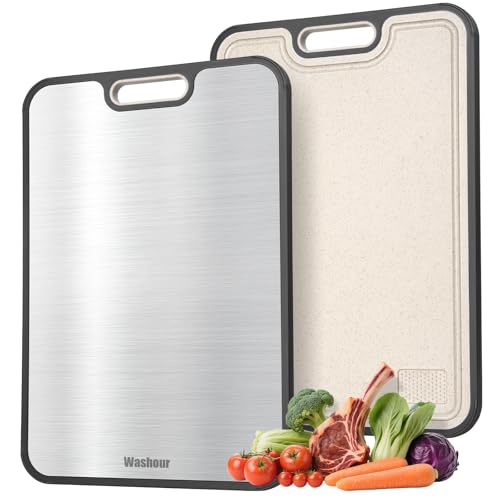
The Washour Titanium Cutting Board measures 16 by 11 inches, giving it a useful footprint for daily prep without taking over a small counter. It uses two food-contact surfaces. The titanium side is intended for raw meat, seafood, and poultry, while the BPA-free PP side fits fruit and ready-to-eat foods. Its non-porous construction should resist absorbed odors and food residue better than grooved wood or plastic boards.
Deep juice channels help contain liquid from tomatoes, meat, and other wet ingredients. A built-in grinding area gives you a place to crush spices without reaching for another tool. The reserved hanging hole supports air drying and storage. At around $20, this board offers several practical features for apartments, dorms, RVs, and campers. Still, its 16-by-11-inch surface may feel tight when cutting large roasts or preparing several ingredients at once.
Pros
- Dual-sided design separates raw-food prep from fruit and ready-to-eat ingredients.
- Non-porous titanium resists odor absorption and should rinse clean with water.
- Juice channels help catch liquids, while the grinding area handles small spice tasks.
Cons
- The 16-by-11-inch work area is limited for large meals or bulky ingredients.
- Titanium can feel harder and louder under a knife than wood or softer plastic, which may not suit every cook.
6. GORILLA GRIP Reversible Kitchen Cutting Boards

Best for: Home cooks needing multiple sizes
The GORILLA GRIP set includes three black, reversible cutting boards made from thick, nonporous plastic. The largest measures 16 x 11.2 inches, while the medium board measures 13.8 x 9.6 inches and the small one measures 11.8 x 8 inches. Each board is 0.37 inches thick, and the set weighs 4.25 pounds. That range covers large meal prep, quick chopping, and smaller tasks like slicing fruit or herbs.
The rubber border and slip-resistant handle help keep each board steadier on a countertop. Deep juice grooves also give liquids a place to collect when cutting tomatoes, meat, or other wet foods. These boards do not need oiling, and their plastic surface resists liquid and odor absorption better than many wood or bamboo options. Each board is tested for BPA-free, food-grade compliance under US regulations. They are dishwasher safe and can also work as serving boards for snacks or charcuterie. At around $22, the set offers three usable sizes for one purchase.
Pros
- Three sizes handle large ingredients, small jobs, and everyday prep.
- Rubber borders, handles, and juice grooves improve countertop control.
- Dishwasher-safe plastic needs no oiling or special maintenance.
Cons
- Plastic surfaces can develop visible knife marks over time.
- The largest board needs considerable cabinet or counter storage space.
5. Acacia Wood Cutting Board

Best for: Daily meal prep in compact kitchens
This 16 x 11-inch cutting board is made from solid acacia wood and measures 1 inch thick. That size gives you enough room for vegetables, herbs, and smaller cuts of meat without taking over a standard countertop. Its added thickness should also provide more stability than thin boards, although it may feel heavier to move or store.
The finish is a key difference. It uses unbleached beeswax, flaxseed oil, and lemon oil instead of mineral oil or synthetic coatings. The maker also states that the board contains no PFAS. FSC certification provides information about the wood’s sourcing, while acacia’s natural oils and tannins may help it resist moisture better than some softer woods. At around $40, it costs more than many basic plastic or bamboo boards. The surface is designed to be gentler on knife edges, but it still needs suitable care to avoid wood damage over time.
Pros
- One-inch thickness adds stability for chopping, carving, and serving.
- Beeswax and natural oil finish avoids mineral oil and PFAS, according to the product details.
- FSC-certified solid acacia provides traceable wood sourcing and a durable prep surface.
Cons
- The 16 x 11-inch work area may feel cramped for large roasts, whole poultry, or batch cooking.
- Solid wood usually needs more careful cleaning and drying than plastic, and the listing does not specify dishwasher safety.
4. ROYAL CRAFT WOOD Wooden Cutting Board Set

Best for: Home cooks needing three board sizes
This set includes three bamboo cutting boards measuring 15 by 10 inches, 12 by 8 inches, and 9 by 6 inches. The largest suits carving, dough, or charcuterie, while the smaller boards handle fruit, vegetables, and quick prep. Made from carbonized bamboo, each board has a smooth sealed surface designed to resist stains, odors, moisture, and everyday knife marks. The natural wood grain also gives the set a cleaner look than many plastic alternatives.
The deep perimeter groove is useful for collecting juices from meat, fruit, and vegetables before they reach the counter. Side handles make the boards easier to move, and they can also work as serving trays or cheese boards. Care is straightforward, but the manufacturer recommends hand washing with mild soap and warm water. At around $50, this is a practical multi-board set rather than a single oversized butcher block. It also includes a 1-year warranty, money-back guarantee, and 24/7 customer support.
Pros
- Three sizes cover small prep, everyday chopping, and larger carving tasks.
- Deep juice grooves help contain liquid from meat and produce.
- Side handles support serving, carrying, and casual entertaining.
Cons
- Hand washing is recommended, so the set may not suit dishwasher users.
- Grooves and handles reduce the flat cutting area compared with a plain rectangular board.
3. Titanium 3-Piece Cutting Board Set
Best for: cooks wanting low-maintenance prep surfaces
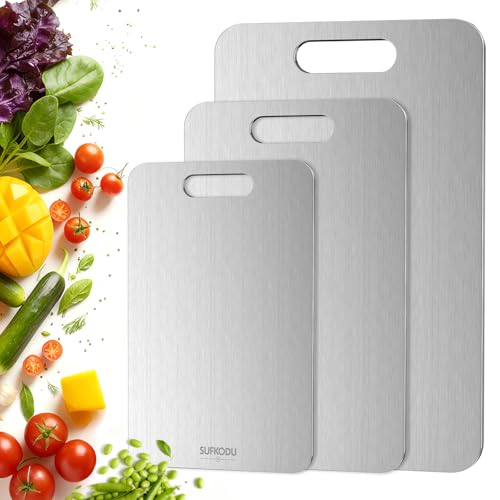
This three-piece set uses one-piece titanium boards with no glue or adhesives. Sizes include 16 by 10 inches, 13 by 8 inches, and 10.5 by 6.5 inches. That range covers large pastry work, everyday vegetable prep, and smaller ingredients. Each board has two usable sides, so you can keep one side for raw meat and the other for cooked foods or produce.
The brushed titanium surface is smooth, non-porous, and designed to resist stains, odors, scratches, and punctures. Titanium also avoids common moisture concerns associated with wood and bamboo, such as warping. Cleanup is simple: rinse the board or place it in the dishwasher. The thinner profile takes less dishwasher space than many thick wooden boards. At around $78 for the set, the price is high, but buyers get three sizes and a durable material. The envelope-style box also makes the set suitable for gifting.
Pros
- Three sizes handle large baking tasks, daily prep, and small ingredients.
- Double-sided surfaces help separate raw and cooked food preparation.
- Dishwasher-safe titanium resists stains, odors, and moisture-related warping.
Cons
- The roughly $78 price is high compared with basic plastic cutting boards.
- Titanium may feel harder and louder under a knife than wood or softer plastic.
2. SNOWCLAD Stainless Steel Cutting Board

Best for: Cooks needing separate meat and produce surfaces
The SNOWCLAD cutting board uses two materials for different kitchen tasks. One side is stainless steel for meat, while the other uses wheat straw PP for vegetables and fruit. Its large format gives you more room for roasts, produce, or meal prep, though the listing does not provide exact dimensions. A juice groove helps collect liquid from meat and cut fruit before it reaches the counter. The stainless steel handle adds a firm place to grip and provides a way to hang the board between uses.
Both surfaces are described as non-porous, so they should not absorb food juices or odors like some wood boards can. Cleaning is straightforward with soap and water, and the board is listed as dishwasher-safe. At around $30, it costs more than a basic plastic board, but the two-sided design may reduce the need for separate prep boards. The stainless steel surface can feel less forgiving under a knife, and it may create more cutting noise than wood or soft plastic.
Pros
- Two-sided construction separates meat prep from fruit and vegetable chopping.
- Non-porous surfaces resist absorbed juices and lingering food odors.
- Dishwasher-safe design and a juice groove simplify cleanup.
Cons
- Exact board dimensions are not listed, making counter and storage planning harder.
- Stainless steel may feel noisy and less comfortable for knives than wood or plastic.
1. Titanium Cutting Board

Best for: Separate meat and produce prep
This 16-by-11-inch kitchen board combines a pure titanium surface with PP construction. Its double-sided layout assigns one side to meat and the other to fruits and vegetables, giving cooks a clear way to separate common prep tasks. A built-in juice groove helps contain runoff, while a garlic-grinding area adds another useful prep spot without requiring a separate tool.
The titanium surface has a non-porous structure that helps limit liquid, odor, and stain absorption. That makes it a practical alternative to boards that hold onto food smells or discolor easily, though cleaning still matters after raw meat contact. Both sides can be rinsed with water, and the hanging hole supports drying and storage. At around $50, it costs more than many basic plastic boards. Its main appeal is the organized two-side layout and low-absorption surface.
Pros
- Separate meat and produce sides help keep food preparation organized.
- Non-porous titanium helps reduce odor, liquid, and stain absorption.
- Juice groove, garlic-grinding area, and hanging hole add practical utility.
Cons
- The hard titanium surface may feel louder and less forgiving than wood or plastic.
- The listing does not specify dishwasher safety, so hand rinsing may be the safer care method.
Buying Guide
The most important factor is a clearly identified food-contact material, because worn coatings, unknown plastics, and poorly bonded layers can transfer unwanted chemicals to food. Choose one solid material, or a board with a documented food-safe finish.
- Material: Choose untreated hardwood such as maple, walnut, or beech, or select food-grade stainless steel. Avoid PVC, recycled plastic with no resin details, and decorative finishes without food-contact information.
- Size and thickness: A 15-by-20-inch surface suits most kitchens. Choose at least 1 inch thick for hardwood, since thinner boards can warp more easily.
- Finish and adhesives: Look for mineral oil or beeswax, not varnish, lacquer, or stain on the cutting face. For bamboo, confirm that the maker specifies formaldehyde-free adhesive.
- Maintenance: Confirm that the board is hand-wash only and can be re-oiled every 1 to 3 months. Avoid models that require chlorine bleach or dishwasher heat.
- Design and price: Non-slip feet, juice grooves, and reversible faces add useful features. Expect to pay about $30 to $80 for a durable hardwood board, depending on size.
If you cannot have everything, prioritize a disclosed food-contact material over grooves, handles, or decorative styling.
Frequently Asked Questions
How do I choose a non-toxic cutting board?
Choose a solid hardwood, bamboo, or food-grade plastic board without questionable coatings, recycled fillers, or damaged surfaces. Maple and beech offer dense wood surfaces, while high-density polyethylene provides a nonporous option. Check the label for food-contact approval, and avoid boards with peeling finishes, deep grooves, or strong chemical odors.
What materials are safest for a food prep board?
Solid hardwood, bamboo, and food-grade polyethylene are generally safe choices when the board is intact and used as directed. Wood and bamboo need hand washing, while polyethylene can handle more frequent sanitizing. Choose a 1- to 2-inch hardwood slab for stability, or a plastic board at least 1/4 inch thick for lighter countertop use.
Can non-toxic cutting boards go in the dishwasher?
Only some food-grade plastic boards can safely go in a dishwasher; wood and bamboo should usually be washed by hand. Heat and prolonged moisture can warp timber, split bamboo, or loosen glued joints. After washing, dry a wooden board upright and apply food-grade mineral oil every one to three months, depending on use.
Are wooden cutting boards safer than plastic?
No, wood is not automatically safer than plastic; either material can be suitable when it is food-contact rated, clean, and free from deep damage. Replace boards with cracks or grooves that remain dirty after washing. A hardwood board may last for years with oiling, while plastic often needs replacement once knife scars become difficult to clean.
Conclusion
Titanium Cutting Board is the top recommendation for shoppers who want a durable, nonporous prep surface and do not mind paying more for it. If a softer knife feel, easier cutting, or a lower upfront cost matters more, choose a well-made wood board instead, since it is gentler on knife edges and can be replaced or refinished over time. Before buying, double-check the board’s length and width, confirm that it fits your counter, sink, dishwasher, and storage space, verify compatibility with your knives and cleaning routine, check how many boards come in the package, and compare the current price across retailers. A little planning helps prevent an awkward fit or disappointing value.