
4 Best Water Filter for Chromium 6 for Home Use
The iSpring RCC7AK-BN Alkaline 6-Stage RO Water Filter System is the top pick for most buyers seeking the best water filter for chromium 6. Its main advantage is a six-stage reverse-osmosis setup with alkaline remineralization, giving households a broader purification system in one under-sink unit.
This guide is for homeowners who want treated drinking water without relying on bottled water. The key factors for this type of filter are under-sink size, installation requirements, replacement-filter cost, and the system’s certified contaminant-reduction claims. Daily water use also matters, since reverse-osmosis systems can produce wastewater during filtration. The four picks below are ranked with clear reasons and honest drawbacks for each, so you can compare performance, upkeep, and value before choosing a water purifier.
Quick Comparison
| # | Product | Best For | Price | |
|---|---|---|---|---|
| 1 | iSpring RCC7AK-BN Alkaline 6-Stage RO Water Filter System | Under-sink alkaline water filtration | $234.99 | View → |
| 2 | ZeroWater Replacement Water Filter 6-Pack | Bulk ZeroWater filter replacements | $74.99 | View → |
| 3 | TOMOON Water Filters for ZeroWater Pitchers | Affordable pitcher filter alternatives | $40.82 | View → |
| 4 | ZeroWater 5-Stage Pitcher Replacement Filters, 6-Pack | Six-pack certified ZeroWater replacements | $47.99 | View → |
4 Top Chromium-6 Water Filters
These four filters are ranked by treatment features, certifications, capacity, and value, counting down to the top pick.
4. ZeroWater 5-Stage Pitcher Replacement Filters, 6-Pack

Best for: Legacy ZeroWater households needing backups
This six-filter replacement pack fits legacy-generation ZeroWater pitchers and dispensers with bottom-thread connections. Listed compatible models include ZR-001, ZR-017, ZR-003, ZR-006, ZR-600, ZR-012, ZR-008, ZD-032-RR, and several others. The BPA-free, food-grade plastic shells twist into place without tools. At around $48 for six filters, it gives households and offices a longer supply than buying one at a time.
The five-stage media is designed to reduce 99.9% of common impurities, including lead, chromium, chlorine, PFOA, and PFOS. It contains 30% more activated carbon than standard aftermarket filters, which may help improve taste and odor. Flow is rated at roughly one gallon in 10 minutes, and each cartridge can treat up to 60 liters under regular conditions. Those figures depend on tap-water quality and usage. TDS output may not reach zero, so a meter remains the better replacement guide.
Pros
- Six filters provide a practical backup supply for homes or offices.
- Five-stage filtration targets several common contaminants and odors.
- Tool-free twist-in installation supports quick cartridge changes.
Cons
- Not compatible with top-loading ZEROF01 systems.
- Filter life can vary widely with water quality and daily consumption.
3. TOMOON Water Filters for ZeroWater Pitchers
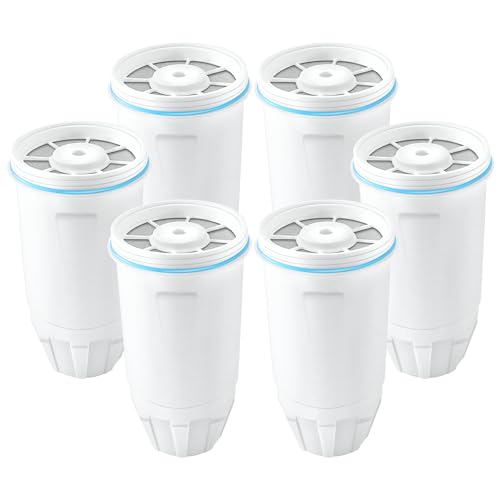
Best for: ZeroWater pitcher owners needing replacements
TOMOON ZR-001 replacement filters come in a six-pack for compatible ZeroWater pitchers and dispensers. Each filter is rated for about 40 gallons, so the pack could cover roughly six months if one filter lasts a month. At around $41, the upfront cost is higher than buying one filter, but the multi-pack lowers the need for frequent reorders.
These filters use a resin material instead of traditional activated carbon. TOMOON says the resin improves filtration by 10.8% and works 200% more efficiently than its carbon comparison. The filters target dissolved solids, metallic and non-metallic minerals, chlorine ions, and odors, which may improve taste. Food-grade plastic forms the housing, while an extra rubber seal is designed to reduce unfiltered water leaks. Compatibility includes ZR-001, ZR-003, ZR-004, ZR-006, ZR-008, ZR-012, ZR-017, and ZR-60 models, plus pitchers such as the ZP-007RP and ZP-010.
Pros
- Six filters provide a convenient replacement supply for regular use.
- Each cartridge handles about 40 gallons of filtered water.
- Resin filtration targets TDS, minerals, chlorine ions, and odors.
Cons
- You must verify your exact pitcher or dispenser model before ordering.
- TOMOON recommends monthly replacement, which adds recurring cost and waste.
2. ZeroWater Replacement Water Filter 6-Pack

Best for: Households with ZeroWater pitchers
ZeroWater’s 5-Stage Replacement Filter pack includes six ion-exchange filters for compatible ZeroWater systems. Each filter has an estimated 15-gallon life, which gives the pack roughly 90 gallons of capacity under ideal conditions. Actual usage varies with water quality. The company recommends replacing a filter when the included TDS meter reads 006.
The filtration system targets dissolved solids, including minerals, salts, metals, and other ions. IAPMO certification covers reductions for PFOA/PFOS, lead, chromium, and mercury. Each filter uses BPA-free plastic. At around $75 per six-pack, the cost works out to about $12.50 per filter. ZeroWater also says one filter can replace up to 110 single-use plastic bottles, although that figure depends on how much water you normally drink and the bottle sizes being compared. These filters fit ZeroWater systems only, not newer Culligan ZeroWater models.
Pros
- Six filters provide an estimated 90 gallons of total capacity.
- IAPMO certification covers PFOA/PFOS, lead, chromium, and mercury reduction.
- Ion-exchange filtration targets dissolved solids for a cleaner-tasting drink.
Cons
- Filter life can drop below 15 gallons when the source water contains more dissolved solids.
- Compatibility is limited to ZeroWater systems and excludes newer Culligan ZeroWater products.
1. iSpring RCC7AK-BN Alkaline 6-Stage RO Water Filter System

Best for: households wanting alkaline filtered water
The iSpring RCC7AK-BN is an under-sink, six-stage reverse osmosis system rated for 75 gallons per day. Its final AK stage adds minerals after RO filtration, which can make the water taste less flat. The system costs around $235 and includes a dedicated faucet for filtered water.
Several details make this model easier to manage. The clear first-stage housing lets you check sediment buildup without opening the unit. Its top-mounted faucet fastener also lets you tighten the faucet from above, although the installation still needs access to the sink area and a drain connection. NSF/ANSI 58 certification covers the complete RO system, not only one component. iSpring lists reductions for TDS, PFAS, chlorine, fluoride, lead, and more than 1,000 other contaminants. Replacement sets cover six months, one year, two years, or three years, depending on the kit selected.
Pros
- Six filtration stages include an alkaline mineral cartridge for a less acidic water profile.
- NSF/ANSI 58 certification applies to the full filtration system.
- A transparent first-stage housing makes sediment buildup easy to inspect.
Cons
- The under-sink assembly takes cabinet space and requires connections to household plumbing.
- Multiple cartridges mean recurring filter purchases, with different replacement schedules to track.
Buying Guide
The key factor is a verified chromium-6 reduction claim from an independent certification body. A label mentioning only chlorine, taste, or total chromium does not prove the cartridge removes hexavalent chromium.
- Certification and test scope: Look for NSF/ANSI 53 or NSF/ANSI 58 certification that specifically names hexavalent chromium. A manufacturer’s general “heavy metal reduction” claim is not enough.
- Filter design: Under-sink reverse osmosis systems commonly use 3 to 5 stages and can provide stronger contaminant reduction. A carbon block works only when its documentation lists chromium-6.
- Capacity and replacements: Compare rated capacity, often 300 to 1,000 gallons, and replacement intervals of 3 to 12 months. Replace cartridges sooner if testing shows high contamination.
- Water testing: Test the incoming water before buying. A certified laboratory report gives a starting chromium-6 level and helps confirm the filter’s stated reduction rate.
- Cost and installation: Pitcher and faucet units often cost $30 to $150, while under-sink RO systems commonly run $150 to $500. Check cabinet space, replacement costs, and whether a plumber is needed.
If you cannot have everything, prioritize a current certification or lab report that explicitly covers chromium-6.
Frequently Asked Questions
How do I choose a water filter for chromium-6?
Choose a water filter certified to reduce hexavalent chromium, also called chromium-6, under NSF/ANSI 53, and match its rated capacity to your household use. Certification should name chromium reduction, not just lead or chlorine. Cartridge capacities vary, so check the label for a figure such as 500 or 1,000 gallons.
What type of filter removes chromium-6 from drinking water?
A reverse osmosis system or a certified carbon cartridge can reduce chromium-6, but only when the product label names that contaminant. Many under-sink systems use several stages, such as sediment filtration, activated carbon, a membrane, and a final carbon filter. Confirm replacement costs and required water pressure before buying.
Can an under-sink water purifier remove chromium-6?
Yes, an under-sink purifier can remove chromium-6 when it carries a specific, verifiable reduction claim for that contaminant. This format suits drinking and cooking water at one faucet. Check the rated flow, cartridge capacity, and installation needs, since some systems require a separate tap and periodic filter changes.
Are pitcher filters effective against chromium-6?
Some pitcher filters can reduce chromium-6, but effectiveness depends on a model with a documented reduction claim and a cartridge replaced on schedule. Look for independent certification or performance data that names hexavalent chromium. A low-cost pitcher without that claim should not be treated as protection against this contaminant.
Conclusion
The iSpring RCC7AK-BN Alkaline 6-Stage RO Water Filter System is the top pick for homeowners who want a substantial under-sink setup with reverse osmosis and alkaline remineralization. If your priority is simpler installation or lower upfront cost, choose a compact point-of-use filter with third-party certification for chromium-6 reduction, but confirm its performance claims before ordering. Double-check the system’s dimensions, plumbing compatibility, replacement-cartridge quantity, and current price, since cabinet space and ongoing filter costs can change the overall value. Also review your local water report, especially the measured chromium-6 level, because treatment needs vary by home. A professional water test can clarify whether additional treatment is needed. Follow the manufacturer’s replacement schedule, and use certified laboratory data when comparing competing filtration systems.